When God created man, He planted something divine into him — a certain conception — a spark that has both light and warmth. The conception that enlightens the mind and indicates what is right and what is wrong is called conscience. Conscience is a natural law. Living in times before any written law, patriarchs and saints pleased God by following the voice of their conscience.
Abba Dorotheus
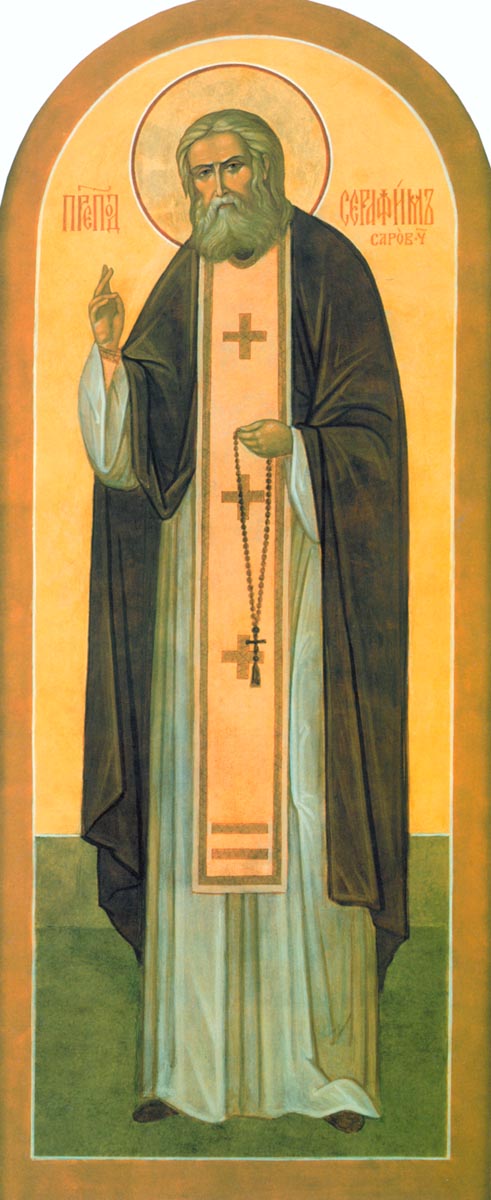
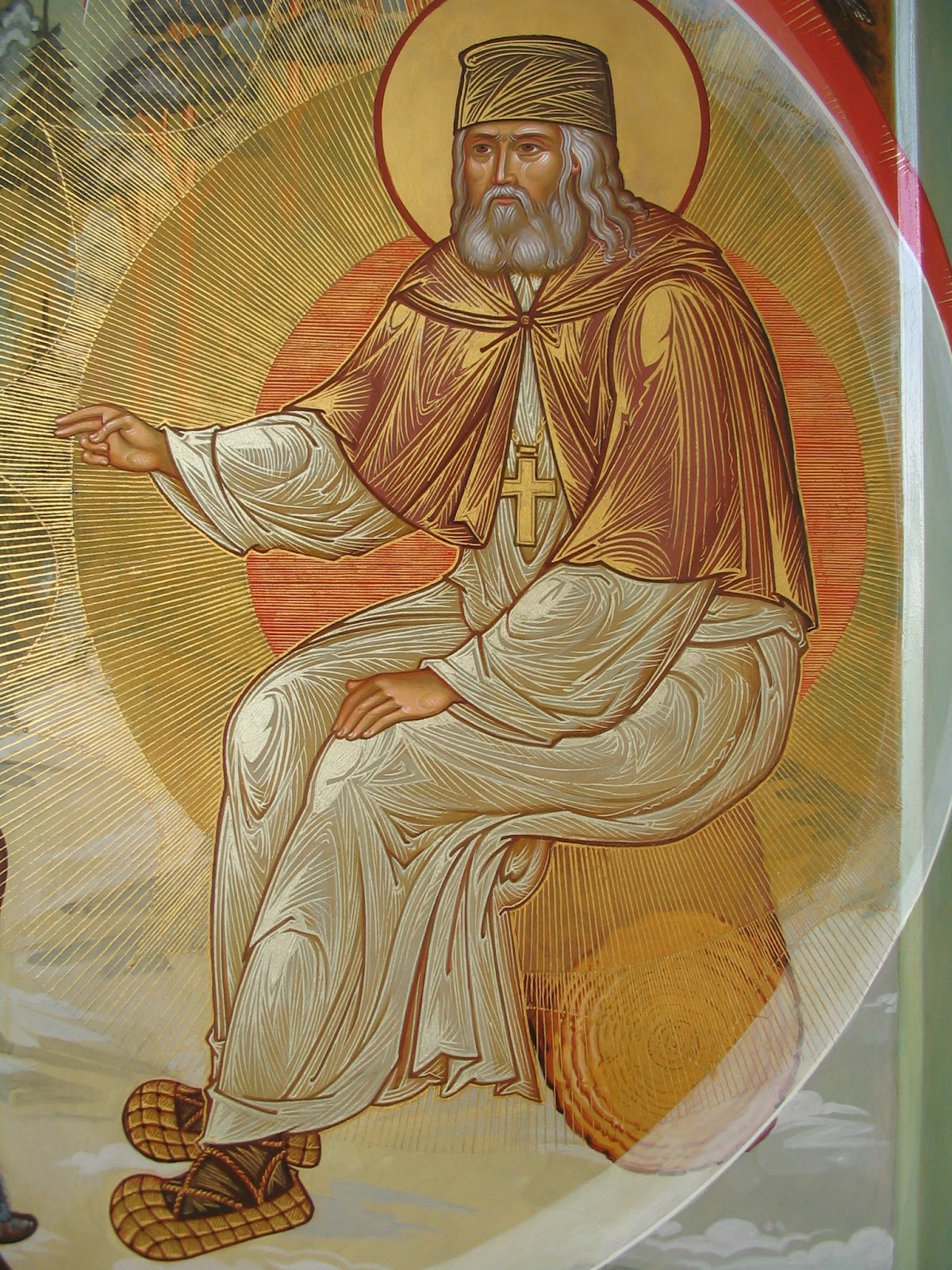
 St. Seraphim of Sarov, the Righteous Wonderworker - Commemorated on January 2 Saint Seraphim of Sarov, a great ascetic of the Russian Church, was born on July 19, 1754. His parents, Isidore and Agathia Moshnin, were inhabitants of Kursk. Isidore was a merchant. Toward the end of his life, he began construction of a cathedral in Kursk, but he died before the completion of the work. His little son Prochorus, the future Seraphim, remained in the care of his widowed mother, who raised her son in piety. After the death of her husband, Agathia Moshnina continued with the construction of the cathedral. Once she took the seven-year-old Prochorus there with her, and he fell from the scaffolding around the seven-storey bell tower. He should have been killed, but the Lord preserved the life of the future luminary of the Church. The terrified mother ran to him and found her son unharmed. Young Prochorus, endowed with an excellent memory, soon mastered reading and writing. From his childhood he loved to attend church services, and to read both the Holy Scripture and the Lives of the Saints with his fellow students. Most of all, he loved to pray or to read the Holy Gospel in private. At one point Prochorus fell grievously ill, and his life was in danger. In a dream the boy saw the Mother of God, promising to visit and heal him. Soon past the courtyard of the Moshnin home came a church procession with the Kursk Root Icon of the Sign (November 27). His mother carried Prochorus in her arms, and he kissed the holy icon, after which he speedily recovered.
 St. Seraphim being healed through the Wonderworking Kursk-Root icon of the Theotokos While still in his youth Prochorus made his plans to devote his life entirely to God and to go to a monastery. His devout mother did not object to this and she blessed him on his monastic path with a copper cross, which he wore on his chest for the rest of his life. Prochorus set off on foot with pilgrims going from Kursk to Kiev to venerate the Saints of the Caves. The Elder Dositheus (actually a woman, Daria Tyapkina), whom Prochorus visited, blessed him to go to the Sarov wilderness monastery, and there seek his salvation. Returning briefly to his parental home, Prohkor bid a final farewell to his mother and family. On November 20, 1778 he arrived at Sarov, where the monastery then was headed by a wise Elder, Father Pachomius. He accepted him and put him under the spiritual guidance of the Elder Joseph. Under his direction Prochorus passed through many obediences at the monastery: he was the Elder's cell-attendant, he toiled at making bread and prosphora, and at carpentry. He fulfilled all his obediences with zeal and fervor, as though serving the Lord Himself. By constant work he guarded himself against despondency (accidie), this being, as he later said, "the most dangerous temptation for new monks. It is treated by prayer, by abstaining from idle chatter, by strenuous work, by reading the Word of God and by patience, since it is engendered by pettiness of soul, negligence, and idle talk." With the blessing of Igumen Pachomius, Prochorus abstained from all food on Wednesdays and Fridays, and went into the forest, where in complete isolation he practiced the Jesus Prayer. After two years as a novice, Prochorus fell ill with dropsy, his body became swollen, and he was beset with suffering. His instructor Father Joseph and the other Elders were fond of Prochorus, and they provided him care. The illness dragged on for about three years, and not once did anyone hear from him a word of complaint. The Elders, fearing for his very life, wanted to call a doctor for him, but Prochorus asked that this not be done, saying to Father Pachomius: "I have entrusted myself, holy Father, to the True Physician of soul and body, our Lord Jesus Christ and His All-Pure Mother." He asked that a Molieben be offered for his health. While the others were praying in church, Prochorus had a vision. The Mother of God appeared to him accompanied by the holy Apostles Peter and John the Theologian. Pointing with Her hand towards the sick monk, the Most Holy Virgin said to St John, "He is one of our kind." Then She touched the side of the sick man with Her staff, and immediately the fluid that had swelled up his body began to flow through the incision that She made. After the Molieben, the brethren found that Prochorus had been healed, and only a scar remained as evidence of the miracle. Soon, at the place of the appearance of the Mother of God, an infirmary church was built for the sick. One of the side chapels was dedicated to Sts Zosimas and Sabbatius of Solovki (April 17). With his own hands, St Seraphim made an altar table for the chapel out of cypress wood, and he always received the Holy Mysteries in this church. After eight years as a novice at the Sarov monastery, Prochorus was tonsured with the name Seraphim, a name reflecting his fiery love for the Lord and his zealous desire to serve Him. After a year, Seraphim was ordained as hierodeacon. Earnest in spirit, he served in the temple each day, incessantly praying even after the service. The Lord granted him visions during the church services: he often saw holy angels serving with the priests. During the Divine Liturgy on Great and Holy Thursday, which was celebrated by the igumen Father Pachomius and by Father Joseph, St Seraphim had another vision. After the Little Entrance with the Gospel, the hierodeacon Seraphim pronounced the words "O Lord, save the God-fearing, and hear us." Then, he lifted his orarion saying, "And unto ages of ages." Suddenly, he was blinded by a bright ray of light. Looking up, St Seraphim beheld the Lord Jesus Christ, coming through the western doors of the temple, surrounded by the Bodiless Powers of Heaven. Reaching the ambo, the Lord blessed all those praying and entered into His Icon to the right of the royal doors. St Seraphim, in spiritual rapture after this miraculous vision, was unable to utter a word, nor to move from the spot. They led him by the hand into the altar, where he just stood for another three hours, his face having changed color from the great grace that shone upon him. After the vision the saint intensified his efforts. He toiled at the monastery by day, and he spent his nights praying in his forest cell.
  St. Seraphim with his priestly stole In 1793, Hierodeacon Seraphim was ordained to the priesthood, and he served the Divine Liturgy every day. After the death of the igumen Father Pachomius, St Seraphim received the blessing of the new Superior Father Isaiah, to live alone in a remote part of the forest three and a half miles from the monastery. He named his new home "Mount Athos," and devoted himself to solitary prayer. He went to the monastery only on Saturday before the all-night Vigil, and returned to his forest cell after Sunday's Liturgy, at which he partook of the Divine Mysteries. Fr Seraphim spent his time in ascetical struggles. His cell rule of prayer was based on the rule of St Pachomius for the ancient desert monasteries. He always carried the Holy Gospels with him, reading the entire New Testament in the course of a week. He also read the holy Fathers and the service books. The saint learned many of the Church hymns by heart, and sang them while working in the forest. Around his cell he cultivated a garden and set up a beehive. He kept a very strict fast, eating only once during the entire day, and on Wednesdays and Fridays he completely abstained from food. On the first Sunday of the Great Fast he did not partake of food at all until Saturday, when he received the Holy Mysteries.
  St. Seraphim of Sarov The holy Elder was sometimes so absorbed by the unceasing prayer of the heart that he remained without stirring, neither hearing nor seeing anything around him. The schemamonk Mark the Silent and the hierodeacon Alexander, also wilderness-dwellers, would visit him every now and then. Finding the saint immersed in prayer, they would leave quietly, so they would not disturb his contemplation. In the heat of summer the righteous one gathered moss from a swamp as fertilizer for his garden. Gnats and mosquitoes bit him relentlessly, but he endured this saying, "The passions are destroyed by suffering and by afflictions." His solitude was often disturbed by visits from monks and laymen, who sought his advice and blessing. With the blessing of the igumen, Fr Seraphim prohibited women from visiting him, then receiving a sign that the Lord approved of his desire for complete silence, he banned all visitors. Through the prayers of the saint, the pathway to his wilderness cell was blocked by huge branches blown down from ancient pine trees. Now only the birds and the wild beasts visited him, and he dwelt with them as Adam did in Paradise. They came at midnight and waited for him to complete his Rule of prayer. Then he would feed bears, lynxes, foxes, rabbits, and even wolves with bread from his hand. St Seraphim also had a bear which would obey him and run errands for him.
  St. Seraphim feeding a bear in the forest In order to repulse the onslaughts of the Enemy, St Seraphim intensified his toil and began a new ascetical struggle in imitation of St Simeon the Stylite (September 1). Each night he climbed up on an immense rock in the forest, or a smaller one in his cell, resting only for short periods. He stood or knelt, praying with upraised hands, "God, be merciful to me, a sinner." He prayed this way for 1,000 days and nights.
 St. Seraphim praying on a rock in asceticism Three robbers in search of money or valuables once came upon him while he was working in his garden. The robbers demanded money from him. Though he had an axe in his hands, and could have put up a fight, but he did not want to do this, recalling the words of the Lord: "Those who take up the sword will perish by the sword" (Mt. 26: 52). Dropping his axe to the ground, he said, "Do what you intend." The robbers beat him severely and left him for dead. They wanted to throw him in the river, but first they searched the cell for money. They tore the place apart, but found nothing but icons and a few potatoes, so they left. The monk, regained consciousness, crawled to his cell, and lay there all night. In the morning he reached the monastery with great difficulty. The brethren were horrified, seeing the ascetic with several wounds to his head, chest, ribs and back. For eight days he lay there suffering from his wounds. Doctors called to treat him were amazed that he was still alive after such a beating. Fr Seraphim was not cured by any earthly physician: the Queen of Heaven appeared to him in a vision with the Apostles Peter and John. Touching the saint's head, the Most Holy Virgin healed him. However, he was unable to straighten up, and for the rest of his life he had to walk bent over with the aid of a stick or a small axe. St Seraphim had to spend about five months at the monastery, and then he returned to the forest. He forgave his abusers and asked that they not be punished.
 St. Seraphim of Sarov, bent over from the injuries he incurred from the robbers In 1807 the abbot, Father Isaiah, fell asleep in the Lord. St Seraphim was asked to take his place, but he declined. He lived in silence for three years, completely cut off from the world except for the monk who came once a week to bring him food. If the saint encountered a man in the forest, he fell face down and did not get up until the passerby had moved on. St Seraphim acquired peace of soul and joy in the Holy Spirit. The great ascetic once said, "Acquire the spirit of peace, and a thousand souls will be saved around you." The new Superior of the monastery, Father Niphon, and the older brethren of the monastery told Father Seraphim either to come to the monastery on Sundays for divine services as before, or to move back into the monastery. He chose the latter course, since it had become too difficult for him to walk from his forest cell to the monastery. In the spring of 1810, he returned to the monastery after fifteen years of living in the wilderness. Continuing his silence, he shut himself up in his cell, occupying himself with prayer and reading. He was also permitted to eat meals and to receive Communion in his cell. There St Seraphim attained the height of spiritual purity and was granted special gifts of grace by God: clairvoyance and wonderworking. After five years of solitude, he opened his door and allowed the monks to enter. He continued his silence, however, teaching them only by example. On November 25, 1825 the Mother of God, accompanied by the two holy hierarchs commemorated on that day (Hieromartyr Clement of Rome, and St Peter, Archbishop of Alexandria), appeared to the Elder in a vision and told him to end his seclusion and to devote himself to others. He received the igumen's blessing to divide his time between life in the forest, and at the monastery. He did not return to his Far Hermitage, but went to a cell closer to the monastery. This he called his Near Hermitage. At that time, he opened the doors of his cell to pilgrims as well as his fellow-monks.
  St. Seraphim of Sarov The Elder saw into the hearts of people, and as a spiritual physician, he healed their infirmities of soul and body through prayer and by his grace-filled words. Those coming to St Seraphim felt his great love and tenderness. No matter what time of the year it was, he would greet everyone with the words, "Christ is Risen, my joy!" He especially loved children. Once, a young girl said to her friends, "Father Seraphim only looks like an old man. He is really a child like us." The Elder was often seen leaning on his stick and carrying a knapsack filled with stones. When asked why he did this, the saint humbly replied,"I am troubling him who troubles me." In the final period of his earthly life St Seraphim devoted himself to his spiritual children, the Diveyevo women's monastery. While still a hierodeacon he had accompanied the late Father Pachomius to the Diveyevo community to its monastic leader, Mother Alexandra, a great woman ascetic, and then Father Pachomius blessed St Seraphim to care always for the "Diveyevo orphans." He was a genuine father for the sisters, who turned to him with all their spiritual and material difficulties. St Seraphim also devoted much effort to the women's monastic community at Diveyevo. He himself said that he gave them no instructions of his own, but it was the Queen of Heaven who guided him in matters pertaining to the monastery. His disciples and spiritual friends helped the saint to feed and nourish the Diveyevo community. Michael V. Manturov, healed by the monk from grievous illness, was one of Diveyvo's benefactors. On the advice of the Elder he took upon himself the exploit of voluntary poverty. Elena Vasilievna Manturova, one of the Diveyevo sisters, out of obedience to the Elder, voluntarily consented to die in place of her brother, who was still needed in this life. Nicholas Alexandrovich Motovilov, was also healed by the monk. In 1903, shortly before the glorification of the saint, the remarkable "Conversation of St Seraphim of Sarov with N. A. Motovilov" was found and printed. Written by Motovilov after their conversation at the end of November 1831, the manuscript was hidden in an attic in a heap of rubbish for almost seventy years. It was found by the author S. A. Nilus, who was looking for information about St Seraphim's life. This conversation is a very precious contribution to the spiritual literature of the Orthodox Church. It grew out of Nicholas Motovilov's desire to know the aim of the Christian life. It was revealed to St Seraphim that Motovilov had been seeking an answer to this question since childhood, without receiving a satisfactory answer. The holy Elder told him that the aim of the Christian life is the acquisition of the Holy Spirit, and went on to explain the great benefits of prayer and the acquisition of the Holy Spirit. Motovilov asked the saint how we can know if the Holy Spirit is with us or not. St Seraphim spoke at length about how people come to be in the Spirit of God, and how we can recognize His presence in us, but Motovilov wanted to understand this better. Then Father Seraphim took him by the shoulders and said, "We are both in the Spirit of God now, my son. Why don't you look at me?" Motovilov replied, "I cannot look, Father, for your eyes are flashing like lightning, and your face is brighter than the sun."
  St. Seraphim, surrounded with the Uncreated Light, before Nicholas Motovilov St Seraphim told him, "Don't be alarmed, friend of God. Now you yourself have become as bright as I am. You are in the fulness of the Spirit of God yourself, otherwise you would not be able to see me like this." Then St Seraphim promised Motovilov that God would allow him to retain this experience in his memory all his life. "It is not given for you alone to understand," he said, "but through you it is for the whole world."
 St. Seraphim of Sarov amidst the Holy Uncreated Light with Nicholas Motovilov Everyone knew and esteemed St Seraphim as a great ascetic and wonderworker. A year and ten months before his end, on the Feast of the Annunciation, St Seraphim was granted to behold the Queen of Heaven once more in the company of St John the Baptist, the Apostle John the Theologian and twelve Virgin Martyrs (Sts Barbara, Katherine, Thekla, Marina, Irene, Eupraxia, Pelagia, Dorothea, Makrina, Justina, Juliana, and Anysia). The Most Holy Virgin conversed at length with the monk, entrusting the Diveyevo sisters to him. Concluding the conversation, She said to him: "Soon, My dear one, you shall be with us." The Diveyevo nun Eupraxia was present during this visit of the Mother of God, because the saint had invited her.
 The Most-holy Theotokos appearing to St. Seraphim, along with Sts. John and twelve Virgin Martyrs In the last year of St Seraphim's life, one of those healed by him saw him standing in the air during prayer. The saint strictly forbade this to be mentioned until after his death. St Seraphim became noticeably weaker and he spoke much about his approaching end. During this time they often saw him sitting by his coffin, which he had placed in the ante-room of his cell, and which he had prepared for himself. The saint himself had marked the place where finally they would bury him, near the altar of the Dormition cathedral. On January 1, 1833 Father Seraphim came to the church of Sts Zosimas and Sabbatius one last time for Liturgy and he received the Holy Mysteries, after which he blessed the brethren and bid them farewell, saying: "Save your souls. Do not be despondent, but watchful. Today crowns are being prepared for us." On January 2, Father Paul, the saint's cell-attendant, left his own cell at six in the morning to attend the early Liturgy. He noticed the smell of smoke coming from the Elder's cell. St Seraphim would often leave candles burning in his cell, and Father Paul was concerned that they could start a fire.
  The repose of St. Seraphim "While I am alive," he once said, "there will be no fire, but when I die, my death shall be revealed by a fire." When they opened the door, it appeared that books and other things were smoldering. St Seraphim was found kneeling before an icon of the Mother of God with his arms crossed on his chest. His pure soul was taken by the angels at the time of prayer, and had flown off to the Throne of the Almighty God, Whose faithful servant St Seraphim had been all his life. St Seraphim has promised to intercede for those who remember his parents, Isidore and Agathia.
  St. Seraphim of Sarov with scenes from his life Troparion - Tone 4 You loved Christ from your youth, O blessed one, and longing to work for Him alone you struggled in the wilderness in constant prayer and labor. With penitent heart and great love for Christ you were favored by the Mother of God. Therefore we cry to you: "Save us by your prayers, venerable Seraphim, our father." Kontakion - Tone 2 Forsaking the beauty as well as the corruption of this world, you settled in the monastery of Sarov, O Saint. There you lived an angelic life, becoming for many the way to salvation. Therefore, Christ has glorified you, Father Seraphim, enriching you with abundant healing and miracles. So we cry to you: "Save us by your prayers, venerable Seraphim, our father."
  St. Seraphim of Sarov the Wonderworker

What is a passion? They are impulses that move us to action by overcoming our will. Because of this we say they enslave us. They are powerful because they are also desires which cannot be satisfied. They act as a force that goes against what we know to be the proper action and lead us to actions which are counter to the commandments of Christ. There is no single list of these passions, but the following is a common list used in early Christian literature: gluttony, unchastity, avarice, anger, dejection, listlessness, self-esteem and pride.
Their ultimate cause is the forgetting of God. Healing begins with faith.
Not all passions are bad. There are both natural and unnatural passions. Our natural passions are our appetite for food, enjoyment of food, fear and sadness. These are necessary for our the preservation of our nature. They are important animal aspect of our being given to by God. But we are more than animals as we are spiritual. Because of this we have an aspiration for the infinite. Often these natural passions which are intended for earthly preservation are transformed into unnatural passions. They are frequently transformed into a mistaken quest for the infinite in things of this material world. The soul loses control and the passions take over. Out task is to control them so they can be limited to their proper purpose. Then they can channeled to seek divine things.
Saint Maximus says,
The natural passions become good in those who struggle when, wisely unfastening them from the things of the flesh, use them to gain heavenly things. For example they can change appetite into the movement of a spiritual longing for divine things; pleasure into pure joy for the cooperation of the mind with divine gifts; fear into care to evade future misfortune due to sin and sadness into corrective repentance for present evil. So the natural passions are not necessarily bad. When we are thinking of God they are kept to their necessary biological functions. Our task is not to eradicate them but to control them, keeping them within the limits necessary for the preservation of the body. They must continually be watched and controlled. This is the basis of asceticism.
Thoughts from Fr. Dimitru Staniloae:
Asceticism means, in the spirit of Eastern thought, the restraint and discipline of the biological, not a battle for its extermination. On the contrary, asceticism means the sublimation of this element of bodily affectivity, not its abolition.... Natural passions can assume a spiritual character and give an increased accent to our love for God.... Now here is the most important point. By controlling them we increase our spiritual blessings.
Fr. Dimitru says,
By putting a bridle and a limit on the pleasure of material things, a transfer of this energy of our nature takes place, in favor of the spirit; pleasure in spiritual blessings grows. ... The challenge we face is not easy. Is difficulty is increased by our tendency to react in the wrong way. Once a pleasure leaves us we feel a loss. This can be painful. Pain or dissatisfaction always follows pleasure. This pain that follows does not lead us to take action to temper the pleasure, but does the opposite. We seek even more pleasure. The cycle continues without satisfaction.
Fr. Dimitru says,
The pain which follows pleasure, instead of making him avoid pleasure, as its source,...pushes his anew into pleasure as if to get rid of it, tangling him even more in this vicious chain. Asceticism is aimed at breaking this dysfunctional cycle of pleasure and pain, liberating us from the unnatural extension of passions that have a proper role in our bodily preservation. This bodily domination through uncontrolled passions is our main block to union with God.
Reference: Orthodox Spirituality, pp77 - 89

Do not fornicate, lest you become a "member of an harlot" (1 Cor. 6:15) instead of a member of Christ, and so you are not severed from the
divine body, deprived of the heavenly inheritance, and cast into Hell.
We have been commanded to crucify our body along with its desires (Gal. 5:24). However, we fall into the same [carnal sins], on account of
which "the wrath of God comes upon the sons of disobedience" (Eph. 5:6).
Even though we have been ordered to mortify our "bodily members which are upon the earth"(Col.3:5), we do not execute this directive. Shouldn't we tremble the apostolic warnings, decisions, and counsels that have been voiced? "If any man defile the temple of God, him shall God destroy" (1 Cor. 3:17).
And elsewhere,"This you should know: that no fornicator, nor unclean person, nor covetous man, who is an idolater, has any inheritance in the kingdom of Christ and God." (Eph. 5:5). And
again, "For this is the will of God: your sanctification, that you should abstain from fornication...
For God has not called us unto uncleanness, but unto holiness" (1 Th. 4:3-7). Who could adequately compile all the commandments that the Apostles and prophets have given us concerning this topic? What does the Apostle Paul order to them who live with modesty, and who for this reason are found amongst the members of Christ? "I wrote to you in an epistle," he says, "not to keep company with fornicators" (1 Cor. 5:9). Since they
themselves are not ashamed, he advises others to avoid keeping company with them in order to
make them feel ashamed: "If any man that is called a brother [i.e., a Christian] is a fornicator ... with such a person do not even eat" (1 Cor. 9:11). Do you see that whoever rolls in fornication is a
general defilement to the Church, and for this reason everyone must avoid him and keep him distanced? St. Paul himself handed over to Satan the fornicator from Corinth, and he did not recommend for anyone to show him love or to
receive him until he displayed the necessary and satisfactory repentance (1 Cor. 5:5). Therefore, definitely save your soul, dear brothers, from all the present and future evils [of fornication].
St. Gregory Palamas
http://www.stnektariosmonastery.org/

The Bible is in a sense a biography of God in this world. In it the Indescribable One has in a sense described Himself.
The Holy Scriptures of the New Testament are a biography of the incarnate God in this world. In them it is related how God, in order to reveal Himself to men, sent God the Logos, Who took on flesh and became man, and as man told men everything that God is, everything that God wants from this world and the people in it.
God the Logos revealed God’s plan for the world and God’s love for the world. God the Word spoke to men about God with the help of words insofar as human words can contain the uncontainable God.
All that is necessary for this world and the people in it—the Lord has stated in the Bible. In it He has given the answers to all questions. There is no question which can torment the human soul, and not find its answer, either directly or indirectly in the Bible.
Men cannot devise more questions than there are answers in the Bible. If you fail to find the answer to any of your questions in the Bible, it means that you have either posed a senseless question or did not know how to read the Bible and did not finish reading the answer in it.
What the Bible Contains
In the Bible God has made known:
(1) what the world is; where it came from; why it exists; what it is heading for; how it will end;
(2) what man is; where he comes from; where he is going; what he is made of; what his purpose is; how he will end;
(3) what animals and plants are; what their purpose is, and what they are used for;
(4) what good is; where it comes from; what it leads to; what its purpose is; how it is attained;
(5) what evil is; where it comes from; how it came to exist; why it exists—how it will come to an end;
(6) what the righteous are and what sinners are; how a sinner becomes righteous and how an arrogant righteous man becomes a sinner; how a man serves God and how he serves satan; the whole path from good to evil, from God to satan;
(7) everything—from the beginning to the end; man’s entire path from the body to God, from his conception in the womb to his resurrection from the dead;
(8) what the history of the world is, the history of heaven and earth, the history of mankind; what their path, purpose, and end are.
The Beauty of the Bible
In the Bible God has said absolutely everything that was necessary to be said to men. The biography of every man—everyone without exception—is found in the Bible. In it each of us can find himself portrayed and thoroughly described in detail; all those virtues and vices which you have and can have and cannot have.
You will find the paths on which your own soul and everyone else’s journey from sin to sinlessness, and the entire path from man to God and from man to satan. You will find the means to free yourself from sin. In short, you will find the complete history of sin and sinfulness, and the complete history of righteousness and the righteous.
If you are mournful, you will find consolation in the Bible; if you are sad, you will find joy; if you are angry—tranquility; if you are lustful—continence; if you are foolish—wisdom; if you are bad—goodness; if you are a criminal—mercy and righteousness; if you hate your fellow man—love.
You will find a remedy for all your vices and weak points, and nourishment for all your virtues and accomplishments. If you are good, the Bible will teach you how to become better and best; if you are kind, it will teach you angelic tenderness; if you are intelligent, it will teach you wisdom.
If you appreciate the beauty and music of literary style, there is nothing more beautiful or more moving than what is contained in Job, Isaiah, Solomon, David, John the Theologian and the Apostle Paul. Here music—the angelic music of the eternal truth of God—is clothed in human words.
The more one reads and studies the Bible, the more he finds reasons to study it as often and as frequently as he can. According to St. John Chrysostom, it is like an aromatic root, which produces more and more aroma the more it is rubbed.
Prayerful Preparation
Just as important as knowing why we should read the Bible is knowing how we should read the Bible. The best guides for this are the holy Fathers, headed by St. John Chrysostom who, in a manner of speaking, has written a fifth Gospel.
The holy Fathers recommend serious preparation before reading and studying the Bible; but of what does this preparation consist?
First of all in prayer. Pray to the Lord to illumine your mind—so that you may understand the words of the Bible—and to fill your heart with His grace—so that you may feel the truth and life of those words.
Be aware that these are God’s words, which He is speaking and saying to you personally. Prayer, together with the other virtues found in the Gospel, is the best preparation a person can have for understanding the Bible.
How We Should Read the Bible
Prayerfully and reverently, for in each word there is another drop of eternal truth, and all the words together make up the boundless ocean of the Eternal Truth.
The Bible is not a book, but life; because its words are spiritual life (Jn 6:63). Therefore its words can be comprehended it we study them with the spirit of its spirit, and with the life of its life. It is a book that must be read with life, by putting it into practice. One should first live it, and then understand it.
Here the words of the Saviour apply: Whoever, is willing to do it will understand that this teaching is from God: If any man will do His will, he shall know of the doctrine, whether it be of God, or whether I speak of myself. (Jn 7:17). Do it so that you may understand it. This is the fundamental rule of Orthodox exegesis [Ed., i.e., explanation].
At first one usually reads the Bible quickly; and then more and more slowly, until finally he will begin to read not even word by word, because in each word he is discovering an everlasting truth and an ineffable mystery.
Everyday read at least one chapter from the Old and the New Testament; but side by side with this, put a virtue from each into practice. Practice it until it becomes a habit to you. Let us say, for instance, that the first virtue is forgiveness of insults. Let this be your daily obligation. And along with it pray to the Lord: O gentle Lord, grant me love towards those who insult me! And when you have made this virtue into a habit, each of the other virtues after it will be easier for you, and so on until the final one.
The main thing is to read the Bible as much as possible. What the mind does not understand, the heart will feel; and if neither the mind understands nor the heart feels, read it over again, because by reading it you are sowing God’s words in your soul. And there they will not perish, but will gradually and imperceptibly pass into the nature of your soul; and there will happen to you what the Saviour said about the man who casts seed on the ground, and sleeps and rises night and day, and the seed sprouts and grows, while the man does not know it. (Mk 4:26-27).
The main thing is: sow, and it is God Who causes and allows what is sown to grow. (I Cor 3:6). But do not rush success, lest you become like a man who sows today, but tomorrow already wants to reap.
Seed in Our Souls
By reading the Bible you are adding yeast to the dough of your soul and body, which gradually expands and fills the soul until it has thoroughly permeated it and makes it rise with the truth and righteousness of the Gospel.
In every instance, the Saviour’s parable about the sower and the seed can be applied to every one of us. The Seed of Divine Truth is given to us in the Bible. By reading it, we sow that seed in our own soul. It fails on the rocky and thorny ground of our soul, but a little also falls on the good soil of our heart—and bears fruit.
And when you catch sight of the fruit and taste it, the sweetness and joy will spur you to clear and plow the rocky and thorny areas of your soul and sow it with the seed of the Word of God. Do you know when a man is wise in the sight of Christ the Lord? It is when he listens to His word and carries it out. The beginning of wisdom is to listen to God’s word: Whosoever heareth these sayings of mine, and doeth them, I will liken him unto a wise man. (Mt 7:24).
Every word of the Saviour has the power and the might to heal both physical and spiritual ailments. Speak the word only, and my servant shall be healed. (Mt 8:8). The Saviour said the word—and the centurion’s servant was healed.
Just as He once did, the Lord even now ceaselessly says His words to you, to me, and to all of us. But we must pause, and immerse ourselves in them and receive them, with the centurion’s faith. And a miracle will happen to us, and our souls will be healed just as the centurion’s servant was healed. For it is related in the Gospel that they brought unto him many that were possessed with devils: and he cast out the spirits with his word, and healed all that were sick. (Mt 8:16).
He still does this today, because the Lord Jesus Christ the same yesterday, and today, and forever. (Heb 13:8).
Beware!
Those who do not listen to God’s words will be judged at the Dreadful Judgment, and it shall be more tolerable for the land of Sodom and Gomorrha in the day of judgment than for them. (Mt 10:14-15).
Beware—at the Dreadful Judgment you will be asked to give an account for what you have done with the words of God, whether you have listened to them and kept them, whether you have rejoiced in them or been ashamed of them, the Lord will also be ashamed of you when He comes in the glory of His Father together with the holy angels: Whosoever therefore shall be ashamed of me and of my words in this adulterous and sinful generation; of him also shall the Son of man be ashamed, when He cometh in the glory of His Father with the holy angels. (Mk 8:38).
There are few words of men that are not vain and idle. Thus there are few words for which we do not mind being judged. For every idle word that men shall speak, they shall give account thereof in the day of judgment. (Mt 12:36).
In order to avoid this, we must study and learn the words of God from the Bible and make them our own; for God proclaimed them to men so that they might accept them, and by means of them also accept the Truth of God itself.
Words of the Word
Great is the mystery of the word—so great that the second Person of the Holy Trinity, Christ the Lord, is called the Word or the Logos in the Bible.
God is the Word (Jn 1:1). All those words which come from the eternal and absolute word are full of God, Divine Truth, Eternity, and Righteousness. If you listen to them, you are listening to God. If you read them, you are reading the direct words of God. God the Word became flesh, became man: And the Word was made flesh, and dwelt among us, (and we beheld his glory, the glory as of the only begotten of the Father,) full of grace and truth. (Jn 1:14), and mute, stuttering man began to proclaim the words of the eternal truth and righteousness of God.
The Grace-Filled Word
In every word of the Saviour there is much that is supernatural and full of grace; and this is what sheds grace on the soul of man when the word of Christ visits it. Thus, the Holy Apostle calls the whole structure of the house of salvation the word of the grace of God: Brethren, I commend you to God, and to the word of His grace, which is able to build you up, and to give you an inheritance among all them which are sanctified. (Acts 20:32).
Like a living grace-filled power, the Word of God has a wonder-working and life-giving effect on a man, so long as he hears it with faith and receives it with faith: When ye received the Word of God which ye heard of us, ye received it not as the word of men, but as it is in truth, the Word of God, which effectually worketh also in you that believe. (I Thess 2:13).
Everything is defiled by sin, but everything is cleansed and sanctified by the Word of God and prayer—everything—all creation from man on down to a worm (I Tim 4:5).
By the Truth which carries in itself and by the Power which it has in itself, the Word of God is quick, and powerful, and sharper than any twoedged sword, piercing even to the dividing asunder of soul and spirit, and of the joints and marrow, and is a discerner of the thoughts and intents of the heart. (Heb 4:12) Nothing remains secret before it or for it.
The Birth-Giving Word
Because every Word of God contains the eternal Word of God—the Logos—it has the power to give birth and regenerate men. And when a man is born of the Word, he is born of the Truth. For this reason St. James the Apostle writes to the Christians that God the Father has brought them forth ... by the word of truth (Jas 1:18), and St. Peter tells them that they have been born anew ... by the word of the living God, which abides forever (I Pet 1:23)
Source - orthodoxheritage.org
http://tokandylaki.blogspot.ca/2013/10/reading-bible-by-st-justin-popovich-1979.html