Wednesday, September 27, 2017

Why Ask the Saints? Jesus Is the Sole Mediator Between Us and the Father


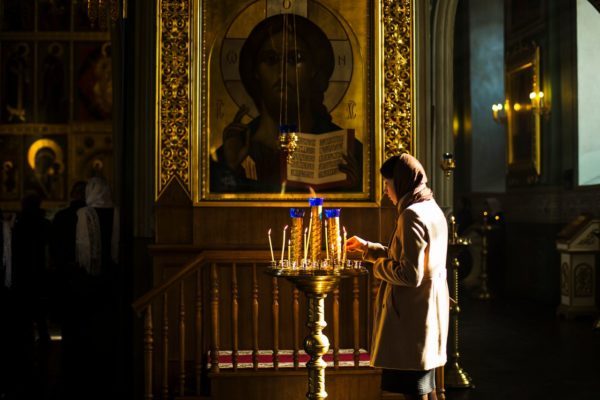
Photo: Archpriest Dionisy, azbuka.ru


Most Protestant churches strongly reject all saintly intercession, citing passages such as 1 Timothy 2:1-5, which says that Jesus is the sole mediator between God and man, as well as Deuteronomy 18:10-11 which seems to forbid invoking departed souls. They also point to the fact that there are no examples in the Bible of living humans praying to dead humans — Jesus Christ being the lone exception, because He is alive and resurrected, and because He is both human and Divine.

Yet the Bible indeed directs us to invoke those in heaven and ask them to pray with us. In Psalms 103, we pray,


“Bless the Lord, O you his angels, you mighty ones who do his word, hearkening to the voice of his word! Bless the Lord, all his hosts, his ministers that do his will!” (Psalms 103:20-21). And in Psalms 148 we pray, “Praise the Lord! Praise the Lord from the heavens, praise him in the heights! Praise him, all his angels, praise him, all his host!” (Psalms 148:1-2).

Not only do those in heaven pray with us, they also pray for us. In the book of Revelation, we read:


“[An] angel came and stood at the altar [in heaven] with a golden censer; and he was given much incense to mingle with the prayers of all the saints upon the golden altar before the throne; and the smoke of the incense rose with the prayers of the saints from the hand of the angel before God” (Rev. 8:3-4). And those in heaven who offer to God our prayers aren’t just angels, but humans as well. John sees that “the twenty-four elders [the leaders of the people of God in heaven] fell down before the Lamb, each holding a harp, and with golden bowls full of incense, which are the prayers of the saints” (Rev. 5:8).

The simple fact is, as this passage shows: The saints in heaven offer to God the prayers of the saints on earth.

Yes, we have Christ as the only intercessor before the Throne, but that never stopped any of our Protestant brethren from asked fellow believers from praying for them. We ask the friends of God to pray for us all the time, when we ask for the prayers of our friends and fellow believers. Asking those who’ve gone on before us is possible because they are alive in Christ, and offer their prayers to Christ just as do we. We all, both those in heaven and those still upon this earth, pray before the same “sole mediator between God and man”, Jesus Christ. It is Christ through whom we approach the Throne of the Father.

Finally, why would we not want to ask for the prayers of those who have already won their place in Paradise, and are already standing before the Throne of God, worshiping the Holy Trinity?

Part of the problem for Protestants to accept the veneration of the saints stems from their reliance on an approach to doctrine and practice as being Bible only based. Proof texts is thus the norm for most protestant debate on the interpretation of any given passage. By the same token, the unity of worship and doctrine found within the Orthodox Church is the fact we’ve based both our way of worship AND our doctrinal teachings on Holy Tradition and Scripture. Since the Bible comes out of the living oral Tradition of the Church, the scriptures can only be properly interpreted from within the life of the Church. Our unity is based on what has always been taught.

The Orthodox Church proclaims as dogma that which has been taught everywhere and at all times. The Church is catholic because that which she teaches and the way she worships is not only from Apostolic times, but was everywhere taught and practiced in Apostolic times. She is catholic (universal) because she is the same now as she was from the earliest times in her history. Her Holy Tradition is relied upon when interpreting the Bible, because it is from her Tradition from which the Bible emerged.

Another point to think about is how we (from our Protestant upbringing) interpret the concept of Christ as the ‘sole mediator between God and man.’ The Protestant idea assumes that ‘mediator’ means ‘intercessor’. But, there is a more profound meaning, not merely an intercessor but the reconciliation of God and man in the reality of the hypostatic union of God and man in the person of Jesus Christ. That is, I think, the real meaning of ‘mediator’. Confer the meaning of the Latin source of the word, mediare: ‘place in the middle’, according to the Pocket OED. Doesn’t that make clear that the Protestant interpretation is missing the real point? Once we understand that, then the whole argument against the intercession of the saints has no reality. 
http://www.pravmir.com/ask-saints-jesus-sole-mediator-us-father/

Friday, September 22, 2017

Time is Money ( Elder Ephraim of Arizona )

Time is the currency with which we acquire eternity. The ancients would say,
“time is money.” Indeed, time is a currency of incalculable value. We do not need
even one dollar to purchase eternity; all we need is one minute. 
How did the thief on the cross acquire Paradise? He did so with one minute. Actually, it took him less than a minute to confess Jesus Christ, to seek His mercy, and to utter with sincere repentance, “Remember me, O Lord, in Your Kingdom.” This is why the Apostle Paul exclaims,
See then that you walk circumspectly, not as fools but as wise, redeeming the time, because the days are evil”(Eph. 5:15-16).
 
 Behold, the greatest purchase of all time! Let us rush to acquire Paradise. We have the means. It will be the best investment of our life, because
Paradise is forever.
Ioasaf, who went on to become a saint of our Orthodox Church, was the son of the King
of India. Saint Barlaam instructed him in the Christian faith and baptized him. One of the many things Righteous Barlaam taught him was the following:
“In a certain land, the citizens had the custom of
electing as their king a foreigner who would come
to visit their city. The unsuspecting visitor
would accept their offer because he was
unaware of their customs and practices. They would crown the visitor and enthrone him
king for a certain period of time, only to
dethrone him a short time later without a warning and exile him to a desolate region. Since
they never revealed to the stranger that
within six months to a year they would strip
him of his regal title and send him into exile, the visitor ruled the land assuming that  he would reign forever, until the end of his life. The thought of exile would never even cross his mind,
and, unmindful of the citizensintent to
banish him, he never  prepared for  such a calamity.
During one such trip to the city by a particular visitor, a good and virtuous citizen who saw
the foreigner approached him and told him in secret, “My fellow countrymen
who dwell in this city are planning to make you a king. You should realize, however, that after a
short period of time they will exile you. So, now when you become king and while you have
all the goods accessible to you, see to it that
you send food, provisions, and other useful items
to that deserted region, so that when they banish you to that land you will have them there waiting for you, and you will be able to live comfortably.
“Oh! Thank you very much for telling me,
replied the guest.
Indeed, by following the advice of that good citizen, this man sent an abundance of provisions to the land of exile. And so, when the time came and the citizens banished him, he went their
gladly and henceforth lived comfortably,
because he had sent many goods there beforehand.
“Similarly,” explained St. Barlaam to Ioasaph, “Man comes into this present life, and, fooled by the world, he believes that he will reign and live many years; death, however, appears unexpectedly
and sends him to eternity. 
The Church, as another good citizen, comes to advise man and points out to him, “Look, you are
not going to be here very long. You will depart for the next life which is eternal.
Make sure, now that you are here and capable, to do good works and send them there to the next life. Thus, when you die and the world ejects you from the earth, you will find these items there. God will repay you thousand times over, and you will henceforth live joyfully.”
The time of our present life is the opportunity to sow. Eternity is the time of harvest. Tell me what you sow, and I will tell you what you will reap. 
Do you sow faith, love, and tears of effort and repentance? You will reap the joy of eternal
Paradise. The Lord confirms this:
You shall receive a hundredfold, and inherit eternal life”(Mt. 19:29). St. Paul also emphasizes this in his epistle to the Corinthians: 
For our light affliction, which is but for a moment, is working for us a far more exceeding and eternal weight of glory”
(2Cor. 4:17).
 
http://www.stnektariosmonastery.org/

Saturday, September 16, 2017

Don’t Believe the Second Thought: A Story from the Life of St. Christopher of Palestine


Once Saint Christopher [6th century] went to Jerusalem to worship at the Holy Sepulchre of the Lord and at the Life-Creating Cross. At the gateway of the church he beheld a monk not moving from the spot. Two ravens flew before his face. Saint Christopher discerned that these were demons, which held the monk back from entering the church.

He asked the brother: “Why do you stand at the gate and not enter?” The brother answered: “Pardon me, Father, but within me struggle two thoughts. One says: go and venerate the Venerable Cross. The other says: don’t go in, make some excuse, and come to venerate the Cross another time.” Then Saint Christopher took the brother by the hand and led him into the church. The ravens immediately disappeared, and the brother venerated the Cross and the Holy Sepulchre. Saint Christopher told this story to someone who was distracted by his duties and neglected his prayers.
 
https://lessonsfromamonastery.wordpress.com/

Tuesday, September 12, 2017

Three Simple Things


I like the sayings of the Desert Fathers (and Mothers), sometimes they are complex and sometimes they are simple. The one from today is simple.


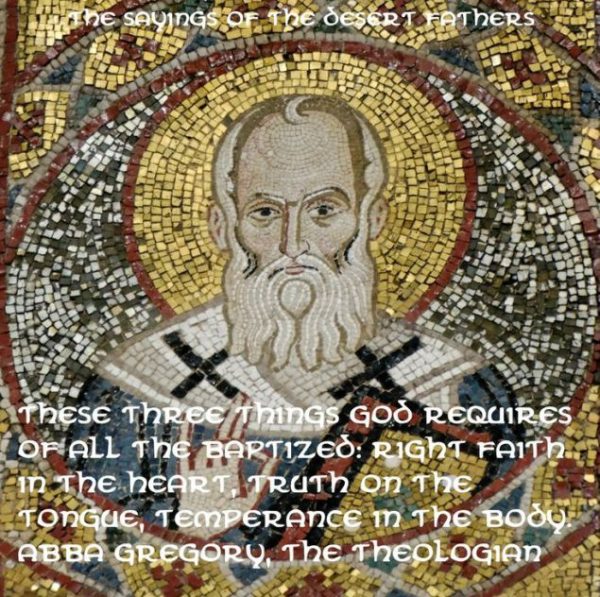
“These three things God requires of all the baptized: right faith in the heart, truth on the tongue, temperance in the body.” — Abba Gregory the Theologian

I like the simplicity of the saying because it is easily understood. At the same time, it does have depth to it. However, I am not about depth today, but some simple commentary. I like the way that Abba Gregory boils down what is needed to live a life of simple Christian faith. All too often, I find myself caught up in theology, philosophy, and political science. I am not saying that is wrong. They are important, and Christians need to engage in those fields. In fact, one other of the Fathers commends learning.


Abba Epiphanius the Wise said, “The acquisition of Christian books is necessary for those who can use them. For the mere sight of these books renders us less likely to sin, and incites us to believe more firmly in righteousness.”

It is an amazing view of books and their place. To me, it is also an amazing view of the place of Christian scholarship from one who had left the world in order to devote himself to the monastic life. [At the time he wrote, there was nothing like the modern Christian cheap romantic tales available in every Christian bookstore.] The idea that acquiring Christian books is a good thing and that just simply seeing them helps those inclined to scholarship to remember to not sin. And, he has a very good point, for sometime when I look at a book I have read, I remember to think about God.


But, it is about Abba Gregory’s saying that I am writing. And, his saying is written for each of us and is striking in its simplicity. The saying is written only for those who have been baptized. That is, it is not written for those who do not know Jesus, but for those who have come to know him. And, he says that if you have come to know him, only three things are really necessary. There is a need for a right faith, orthodoxy, but notice that it is to be held in the heart and not in the brain. This is not faith merely as intellectual content, but faith as trust. That is it is definitely not trust as over against intellectual belief, but that mixture of the two that keeps you in Christ. It must be right faith, but it also must be held in the heart.

Truth on the tongue speaks to our right relationships with each other. Relationships based on lies do not work. Thus, we need to speak truth, in love, to each other. Abba Gregory is not talking about truth about each other. Rather, he is talking about speaking to each other in truthful ways. And, of course, speaking to God in prayer in truthful ways. Finally, temperance in the body is obvious. It is amazing how a whole set of “household rules” can be summarized in the simple statement about temperance in our behavior. Many, if not most, of what are called the cardinal sins in the West are sins of excess, of one type or another. Temperance works against gluttony, lust, accedie, etc. It is the stance to not overdo it toward any extreme.

So, simple advice from a simple monk. Good stuff. 
http://www.pravmir.com/three-simple-things/

A strange demonic trap


In chapter 45 of the wonderful book, Spiritual Meadow, Ioannis Moskhos writes:

‘One of the elders told us the following:

Abba Theodoros Iliotis used to talk about a great ascetic who lived as a recluse on the Mount of Olives and was constantly being attacked by the demon of lust. One day, after a particularly severe attack, the ascetic began to lose heart and he said to the demon: “How long are you going to continue with this? Just go away. We’ve grown old together”.


Then the devil appeared to the monk, in full view, and said: “Swear that you’ll not tell anybody else what I’m about to say to you and I won’t fight you again”.

The elder swore: “By Him Who resides in the heavens, I won’t tell anyone”. Then the demon said to him: “Don’t venerate this icon and I won’t bother you”. The icon depicted Our Lady holding Christ in her arms. The recluse said to the demon: “Let me think”.

The next day (according to Abba Theodoros Iliotis, who told us this and was at that time living in the lavra of Faran) the man sent for Abba Theodoros and told him everything.

“Well, abba, you were certainly tricked into swearing. But you’ve done well to reveal it. Because it would be better for you to enter every brothel you see in this land than to refuse the venerate Our Lord Jesus Christ and His Mother”.

He supported and fortified the elder with more words and then returned to his own place. The demon appeared again to the recluse and said to him: “What is this, wicked elder*? Didn’t you swear to me that you wouldn’t tell anyone? Yet you revealed everything to that man who came to you. I’m telling you, wicked elder, that on the Day of Judgment you’ll be condemned for perjury”.

The recluse replied: “I know that I swore and that I broke my oath. But I didn’t commit perjury against my Lord and Creator. I won’t listen to you. Because you’ll receive unavoidable punishment, since you were the instigator of the bad advice and the perjury”’.

* A play on words. The Hellenistic Greek word kaloyeros (literally ‘good [=’venerable’] elder’, hence ‘monk’) is replaced here by kakoyeros (‘bad elder’).

Metropolitan Meletios (Kalamaras) of Nikopolis and Preveza has this to say about the story:

‘What are we to conclude from this:
It’s a great mistake to try and solve our spiritual problems on our own. Because even holy people struggle at times.
The worst sin is for us to devalue our faith in Christ and to think that certain human problems are so important that we cheapen our faith because of them
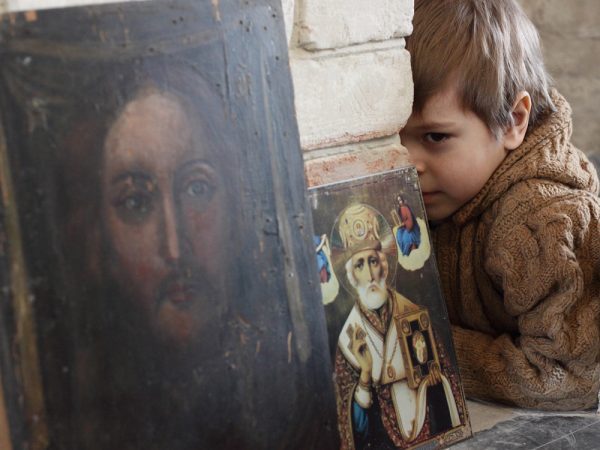
Icons aren’t photographs or frames. They have to do with the faith.

The author of ‘The Spiritual Meadow’, Saint Ioannis Moskhos (John Moschus) whose feast is celebrated on 11/24 March, was born in Damascus in 545, in other words when it was still part of the empire of New Rome (‘Byzantium’). He became a monk and then travelled extensively with his friend and pupil Sofronios, later Patriarch of Jerusalem, who was also canonized and shares his feast day with Ioannis.

Apart from the edifying stories it contains, the text is also interesting from other points of view.

In the first place, Saint Ioannis- unusually for the time- is meticulous in his attribution of his sources. Even in the example above, although the recluse is not named, the author is careful to record that the narrative is directly linked to Abba Theodoros himself. In other collections of the period, the stories usually begin simply ‘One of the elders told us…’.

By the same token, Saint Ioannis’ work provides valuable background detail regarding the places he visited and the various practices of the ascetics he met.

The work is also excellent source of information about ordinary sixth century Greek. The language in the Meadow stands roughly in the same relationship to that of the Fathers as the Gospels do to the Epistles, and for much the same reasons. As the Gospels do, Saint Ioannis is relating a series of narratives; the Epistles and the works of the Fathers are largely aimed at explaining these narratives and putting them into a theological context. So his language is informal, engaging and refreshing. 
http://pemptousia.com/2017/09/a-strange-demonic-trap/