Make muscle pain a memory with ginger

When Danish researchers asked achy people to jazz up their diets with ginger, it eased muscle and joint pain, swelling and stiffness for up to 63 percent of them within two months. Experts credit ginger’s potent compounds called gingerols, which prevent the production of pain-triggering hormones. The study-recommended dose: Add at least 1 teaspoon of dried ginger or 2 teaspoons of chopped ginger to meals daily.
Cure a toothache with cloves

Got a toothache and can’t get to the dentist? Gently chewing on a clove can ease tooth pain and gum inflammation for two hours straight, say UCLA researchers. Experts point to a natural compound in cloves called eugenol, a powerful, natural anesthetic. Bonus: Sprinkling a 슠 teaspoon of ground cloves on meals daily may also protect your ticker. Scientists say this simple action helps stabilize blood sugar, plus dampen production of artery-clogging cholesterol in as little as three weeks.
Heal heartburn with cider vinegar

Sip 1 tablespoon of apple cider vinegar mixed with 8 ounces of water before every meal, and experts say you could shut down painful bouts of heartburn in as little as 24 hours. “Cider vinegar is rich in malic and tartaric acids, powerful digestive aids that speed the breakdown of fats and proteins so your stomach can empty quickly, before food washes up into the esophagus, triggering heartburn pain,” explains Joseph Brasco, M.D., a gastroenterologist at the Center for Colon and Digestive Diseases in Huntsville, AL.
Erase earaches with garlic
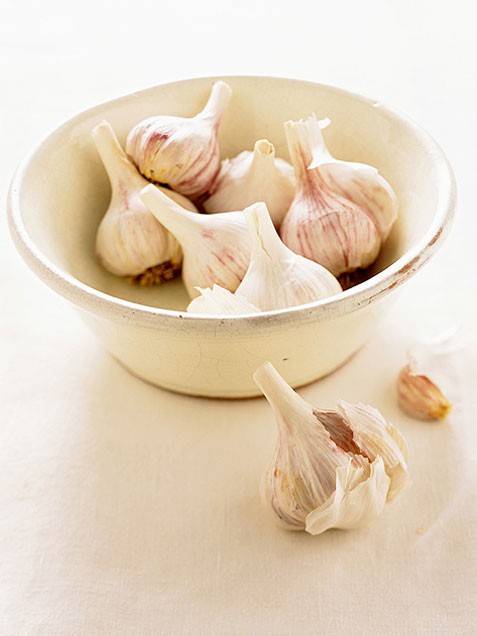
Painful ear infections drive millions of Americans to doctors’ offices every year. To cure one fast, just place two drops of warm garlic oil into your aching ear twice daily for five days. This simple treatment can clear up ear infections faster than prescription meds, say experts at the University of New Mexico School of Medicine. Scientists say garlic’s active ingredients (germanium, selenium, and sulfur compounds) are naturally toxic to dozens of different pain-causing bacteria. To whip up your own garlic oil gently simmer three cloves of crushed garlic in a half a cup of extra virgin olive oil for two minutes, strain, then refrigerate for up to two weeks, suggests Teresa Graedon, Ph.D., co-author of the book, Best Choices From The People’s Pharmacy. For an optimal experience, warm this mix slightly before using so the liquid will feel soothing in your ear canal.
Chase away joint and headache pain with cherries

Latest studies show that at least one in four women is struggling with arthritis, gout or chronic headaches. If you’re one of them, a daily bowl of cherries could ease your ache, without the stomach upset so often triggered by today’s painkillers, say researchers at East Lansing ’s Michigan State University . Their research reveals that anthocyanins, the compounds that give cherries their brilliant red color, are anti-inflammatories 10 times stronger than ibuprofen and aspirin. “Anthocyanins help shut down the powerful enzymes that kick-start tissue inflammation, so they can prevent, as well as treat, many different kinds of pain,” explains Muraleedharan Nair, Ph.D., professor of food science at Michigan State University . His advice: Enjoy 20 cherries (fresh, frozen or dried) daily, then continue until your pain disappears.
Fight tummy troubles with fish

Indigestion, irritable bowel syndrome, inflammatory bowel diseases…if your belly always seems to be in an uproar, try munching 18 ounces of fish weekly to ease your misery. Repeated studies show that the fatty acids in fish, called EPA and DHA, can significantly reduce intestinal inflammation, cramping and belly pain and, in some cases, provide as much relief as corticosteroids and other prescription meds. “EPA and DHA are powerful, natural, side effect-free anti-inflammatories, that can dramatically improve the function of the entire gastrointestinal tract,” explains biological chemist Barry Sears, Ph.D., president of the Inflammation Research Foundation in Marblehead , MA . For best results, look for oily fish like salmon, sardines, tuna, mackerel, trout and herring.
Prevent PMS with yogurt

Up to 80 percent of women will struggle with premenstrual syndrome and its uncomfortable symptoms, report Yale researchers. The reason: Their nervous systems are sensitive to the ups and downs in estrogen and progesterone that occur naturally every month. But snacking on 2 cups of yogurt a day can slash these symptoms by 48 percent, say researchers at New York ’s Columbia University . “Yogurt is rich in calcium, a mineral that naturally calms the nervous system, preventing painful symptoms even when hormones are in flux,” explains Mary Jane Minkin, M.D., a professor of gynecology at Yale University .
Tame chronic pain with turmeric

Studies show turmeric, a popular East Indian spice, is actually three times more effective at easing pain than aspirin, ibuprofen or naproxen, plus it can help relieve chronic pain for 50 percent of people struggling with arthritis and even fibromyalgia, according to Cornell researchers. That’s because turmeric’s active ingredient, curcumin, naturally shuts down cyclooxygenase 2, an enzyme that churns out a stream of pain-producing hormones, explains nutrition researcher Julian Whitaker, M.D. and author of the book, Reversing Diabetes. The study-recommended dose: Sprinkle 1/4 teaspoon of this spice daily onto any rice, poultry, meat or vegetable dish.
End endometrial pain with oats
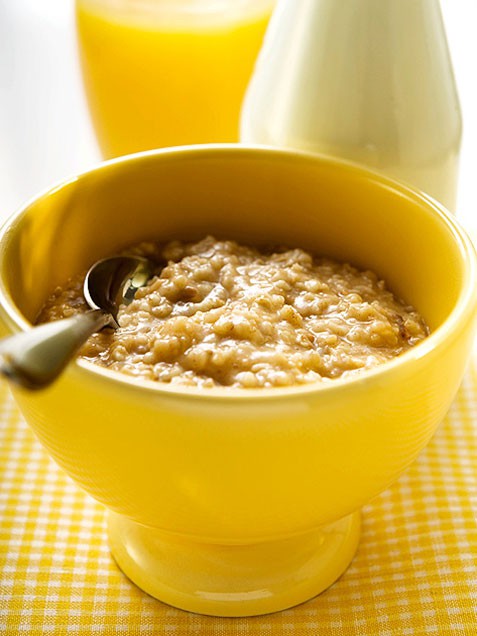
The ticket to soothing endometriosis pain could be a daily bowl of oatmeal. Endometriosis occurs when little bits of the uterine lining detach and grow outside of the uterus. Experts say these migrating cells can turn menstruation into a misery, causing so much inflammation that they trigger severe cramping during your period, plus a heavy ache that drags on all month long. Fortunately, scientists say opting for a diet rich in oats can help reduce endometrial pain for up to 60 percent of women within six months. That’s because oats don’t contain gluten, a trouble-making protein that triggers inflammation in many women, making endometriosis difficult to bear, explains Peter Green, M.D., professor of medicine at Colombia University .
Soothe foot pain with salt

Experts say at least six million Americans develop painful ingrown toenails each year. But regularly soaking ingrown nails in warm salt water baths can cure these painful infections within four days, say scientists at California ’s Stanford University . The salt in the mix naturally nixes inflammation, plus it’s anti-bacterial, so it quickly destroys the germs that cause swelling and pain. Just mix 1 teaspoon of salt into each cup of water, heat to the warmest temperature that you can comfortably stand, and then soak the affected foot area for 20 minutes twice daily, until your infection subsides.
Prevent digestive upsets with pineapple

Got gas? One cup of fresh pineapple daily can cut painful bloating within 72 hours, say researchers at California ’s Stanford University . That’s because pineapple is natually packed with proteolytic enzymes, digestive aids that help speed the breakdown of pain-causing proteins in the stomach and small intestine, say USDA researchers.
Relax painful muscles with peppermint

Suffering from tight, sore muscles? Stubborn knots can hang around for months if they aren’t properly treated, says naturopath Mark Stengler, N.D., author of the book, The Natural Physician’s Healing Therapies. His advice: Three times each week, soak in a warm tub scented with 10 drops of peppermint oil. The warm water will relax your muscles, while the peppermint oil will naturally soothe your nerves — a combo that can ease muscle cramping 25 percent more effectively than over-the-counter painkillers, and cut the frequency of future flare-ups in half, says Stengler.
Give your back some TLC with grapes
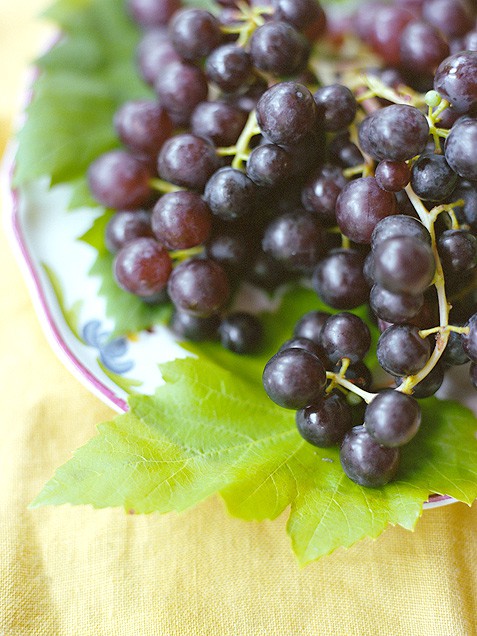
Got an achy back? Grapes could be the ticket to a speedy recovery. Recent studies at Ohio State University suggest eating a heaping cup of grapes daily can relax tight blood vessels, significantly improving blood flow to damaged back tissues (and often within three hours of enjoying the first bowl). That’s great news because your back’s vertebrae and shock-absorbing discs are completely dependent on nearby blood vessels to bring them healing nutrients and oxygen, so improving blood flow is essential for healing damaged back tissue, says Stengler.
Wash away pain injuries with water

Whether it’s your feet, your knees or your shoulders that are throbbing, experts at New York ’s Manhattan College , say you could kick-start your recovery in one week just by drinking eight 8-ounce glasses of water daily. Why? Experts say water dilutes, and then helps flush out, histamine, a pain-triggering compound produced by injured tissues. “Plus water is a key building block of the cartilage that cushions the ends of your bones, your joints’ lubricating fluid, and the soft discs in your spine,” adds Susan M. Kleiner, Ph.D., author of the book, The Good Mood Diet. “And when these tissues are well-hydrated, they can move and glide over each other without causing pain.” One caveat: Be sure to measure your drinking glasses to find out how large they really are before you start sipping, she says. Today’s juice glasses often hold more than 12 ounces, which means five servings could be enough to meet your daily goal.
Heal sinus problems with horseradish

Latest studies show sinusitis is the nation’s number one chronic health problem. And this condition doesn’t just spur congestion and facial pain, it also makes sufferers six times more likely to feel achy all-over. Horseradish to the rescue! According to German researchers, this eye-watering condiment naturally revs up blood flow to the sinus cavities, helping to open and drain clogged sinuses and heal sinus infections more quickly than decongestant sprays do. The study-recommended dose: One teaspoon twice daily (either on its own, or used as a sandwich or meat topping) until symptoms clear.
Beat bladder infections with blueberries
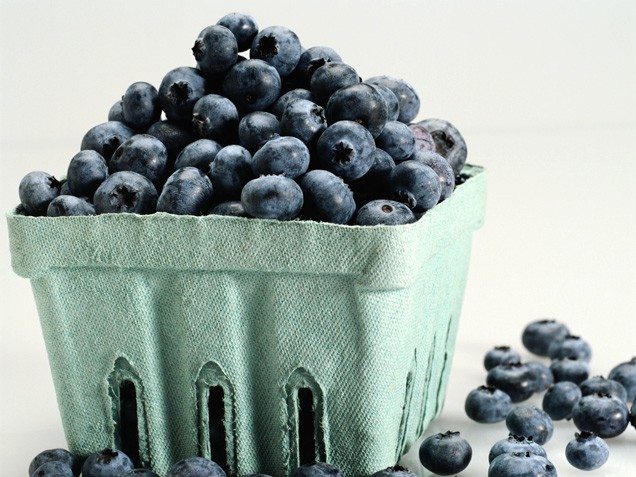
Eating 1 cup of blueberries daily, whether you opt for them fresh, frozen or in juice form, can cut your risk of a urinary tract infection (UTIs) by 60 percent, according to researchers at New Jersey’s Rutgers University. That’s because blueberries are loaded with tannins, plant compounds that wrap around problem-causing bacteria in the bladder, so they can’t get a toehold and create an infection, explains Amy Howell, Ph.D. a scientist at Rutgers University .
Heal mouth sores with honey

Dab painful canker and cold sores with unpasteurized honey four times daily until these skin woes disappear, and they’ll heal 43 percent faster than if you use a prescription cream, say researchers at the Dubai Specialized Medical Center in the United Arab Emirates . Raw honey’s natural enzymes zap inflammation, destroy invading viruses and speed the healing of damaged tissues, say the study authors.
Fight breast pain with flax
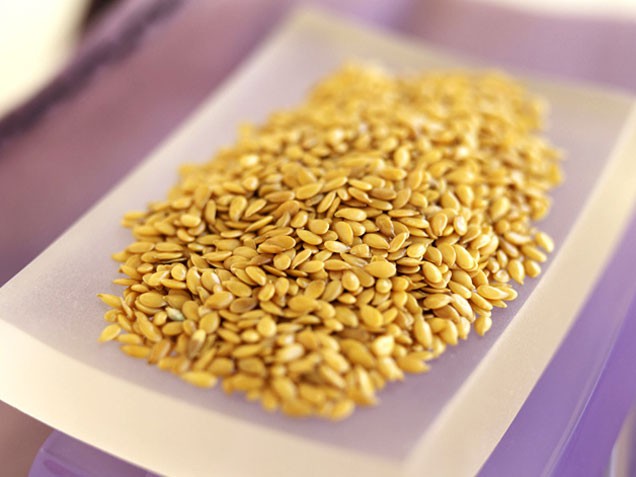
In one recent study, adding 3 tablespoons of ground flax to their daily diet eased breast soreness for one in three women within 12 weeks. Scientists credit flax’s phytoestrogens, natural plant compounds that prevent the estrogen spikes that can trigger breast pain. More good news: You don’t have to be a master baker to sneak this healthy seed into your diet. Just sprinkle ground flax on oatmeal, yogurt, applesauce or add it to smoothies and veggie dips.
Cure migraines with coffee

Prone to migraines? Try muscling-up your painkiller with a coffee chaser. Whatever over-the-counter pain med you prefer, researchers at the National Headache Foundation say washing it down with a strong 12- ounce cup of coffee will boost the effectiveness of your medication by 40 percent or more. Experts say caffeine stimulates the stomach lining to absorb painkillers more quickly and more effectively.
Tame leg cramps with tomato juice

At least one in five people regularly struggle with leg cramps. The culprit? Potassium deficiencies, which occur when this mineral is flushed out by diuretics, caffeinated beverages or heavy perspiration during exercise. But sip 10 ounces of potassium-rich tomato juice daily and you’ll not only speed your recovery, you’ll reduce your risk of painful cramp flare-ups in as little as 10 days, say UCLA researchers.
http://agapienxristou.blogspot.ca/2013/08/20-ways-to-cure-pain.html

Hieromonk Adrian (Pashin). “The Way of a Pilgrim” and Bishop Ignatius (Brianchaninov’s) Teaching on Prayer".
Basing himself on the legacy of St Ignatius of the Caucasus, Alexey Ilyich Osipov, the well-known Professor of the Moscow Theological Academy, reflects on the issues of spiritual practices in Eastern and Western Christian traditions, as well as the place of the book The Way of a Pilgrim in Christian spiritual life.
Hieromonk Adrian (Pashin): Alexey Ilyich, your booklet on the Jesus Prayer was published recently. What prompted you to tackle this exclusively (as it might seem) monastic subject?
Alexey Ilyich Osipov: The thing is that I was invited to give a lecture in Italy, at the famous Bose monastery, where they hold conferences on various topics every year. Representatives of different Churches are invited – not only from the Catholic Church, but from the Orthodox and even the Protestant Churches as well. That was in September 2004. The topic of the conference was prayer and, I think, even the Jesus Prayer, but I don’t remember for sure. How did the theme for my talk come up? The Chancellor of one of the Pontifical Institutes in Rome visited our Academy about twenty years ago. During his talk in the conference hall he said, in particular, that Catholic monastics are currently very interested in Hindu meditation practices and The Way of a Pilgrim, where a quite peculiar teaching on the Jesus Prayer is expounded. That is why I decided to write a talk on the subject of “The Teaching on the Jesus Prayer according to Bishop Ignatius (Brianchaninov) and The Way of a Pilgrim”. I thought that the subject would be of interest both to Catholics and to me because I had read The Way when I was 16 or 17 and it had made a very inspirational impression on me back then. I remember trying to practice the Jesus Prayer for a day or two, using the Pilgrim’s method – I could not do it for much longer; later, when I took up work on my talk, I understood that that had been fortunate. I gave my talk at the conference. The Orthodox showed interest while the Catholic audience received it in silence. However, one of the famous (I am not going to name him) secular scholars from St Petersburg (not a theologian), a regular participant at all the Bose conferences, expressed his displeasure at my talk. The talk was then translated into Italian and published both in Italy and Russia. Such is its background.
Hierom. Adrian: So it seems as if The Way of a Pilgrim, a book by an unknown author that is rather popular here in Russia, is also well-known abroad?
A. I. Osipov: It is not simply well-known abroad, but, as that Chancellor said, Catholic monasteries pay a lot of attention to it. It is being read, studied – it is being followed as a guide.
Hierom. Adrian: Why do you think Catholics are so interested in the book?
A. I. Osipov: This is how things stand. First of all, the Pilgrim achieved the unceasing Jesus Prayer and reached special soul-and-body states at a stunning speed – in just a few weeks, well, maybe a few months, whereas Bishop Ignatius writes that according to the teaching of the Holy Fathers “this takes many years.” The Pilgrim states that when in the beginning the elder gave him an obedience to say three thousand prayers daily, he felt that the prayer became easy and desirable in just two days. After that, the elder ordered him to say six thousand prayers, and after only ten days – twelve thousand. And he “finished the twelve thousand prayers with ease early in the evening,” and “in about three weeks . . . I began to feel . . . that pleasure was simmering in my heart … and I myself turned into rapture. The blind man [in the story – A.Z.J.] reached the same state in the same lightning-fast way – in less than a week (!); he began to follow the method shown to him by the Pilgrim. “In about five days I started to feel an intense warmth and . . . he began to see light from time to time . . . sometimes, when he was entering his heart in his imagination, it felt as if the powerful flame of a lit candle was kindled with sweetness in his heart and, leaping out through his throat, illumined him; by the light of that flame he could even see distant things.
Such a quick and easy method, compared to the rigorous feat of the struggle with passions undertaken by the Holy Fathers for many years, is very tempting to all who would like to avoid the "no pains, no gains" way.
The second and no less stimulating reason for interest in this book is the vanity and pride that lure people into achieving high states at once, without taking the preliminary steps on the spiritual journey. These passions turn an ascetic into a daydreamer, with quite logical and often terrible consequences for his life.
Bishop Ignatius characterizes such aspirations of Catholic ascetics very pointedly, “They are at once lured and lure their readers to heights inaccessible to the novice, become themselves conceited and make others conceited. A heated, often frantic dreaminess replaces everything spiritual for them—they have no idea of true spirituality. They consider this dreaminess as grace. “Ye shall know them by their fruits,” (Mt 7:16) said the Savior. We all know only too well through what crimes, torrents of blood and decidedly anti-Christian behavior Western fanatics expressed their ugly way of thinking, their ugly feeling of heart.”
Such are the hidden reasons for the interest in The Way.
Hierom. Adrian: Do you think that such a quick way is dangerous?
A. I. Osipov: In this case I by no means wish to speak for myself, because I don’t have any experience in this matter. My understanding is based on the theoretical study of the Holy Fathers of ascetic life and, above all, on the writings of the holy Bishop Ignatius (Brianchaninov). Why is it that I turned to his works in particular? As is well known, the oral and written accounts of him by all the Optina Elders and many other pious Russian ascetics are not simply positive, but rather, I’d say, are filled with admiration. They spoke and wrote about him as a true teacher who had a profound understanding of spiritual life and expounded the way of the Holy Fathers in his writings. I will quote their statements.
St Macarius of Optina called him “a great mind.” St Barsanuphius of Optina wrote, “When I read his writings, I marvel at his truly angelic mind, his amazingly deep understanding of the Holy Scriptures. For some reason, I am especially favorably disposed toward his writings; they somehow have a special appeal for my heart and my mind, illumining it with a truly evangelical light.” “The fifth volume of Bishop Ignatius’ writings contains the teaching of the Holy Fathers applied to modern-day monasticism and teaches how the writings of the Holy Fathers should be read. Bishop Ignatius had a profound outlook and was, in that respect, probably even deeper than Bishop Theophan [the Recluse – A.Z.J.]. His word has a powerful effect on the soul for it proceeds from experience.” Abbot Nikon (Vorobyev) expresses the same thought fifty years later, “How grateful I am to him for his writings! Not to understand and not to appreciate him means not to understand anything about spiritual life. I would dare to say that Bishop Theophan’s writings (may the holy Vladyka forgive me) are a schoolboy’s works compared to those of a professor—the writings of Bishop Ignatius (Brianchaninov). St Nikon (Belyaev) of Optina called Bishop Ignatius’ work “the ABC of spiritual life” – he held it in such high esteem. And it is Bishop Ignatius’ writings that all the other Optina Elders recommended for study, in particular, his teaching on prayer – a true guide to spiritual life.
We find remarkable words about Bishop Ignatius in the writings of Abbess Arsenia (Sebryakova), “I read him with great pleasure, to my soul’s comfort and edification. The words of Vladyka himself are dear to me.” Schema-Abbot John of Valaam refers to Bishop Ignatius and offers the bishop’s advice to his own spiritual children as the most authoritative for our times. (In this connection, I would like to point out in parentheses that any Church preacher or writer who, speaking of spiritual life in his writings, does not turn to Bishop Ignatius’ writings, gives a clear testimony to “what manner of spirit he is of” [Lk 9:55 – A.Z.J.] However, turning to those works is not in itself an indicator of the writer’s spirituality). So taking into account this multitude of undoubted spiritual witnesses, I decided to compare the teaching on the Jesus Prayer in The Way of a Pilgrim with that of Bishop Ignatius.
Hierom. Adrian: Guidance in practicing the Jesus Prayer is necessary; without it, as you write, we can fall into spiritual delusion (prelest). But what should we do today, when, in the words of Bishop Ignatius (and you agree with them), spiritual guidance and spiritual fatherhood have become so scarce? How then are we to learn how to pray correctly?
A. I. Osipov: First of all, I would remind you once again that when it comes to my advice on the careful practice of the Jesus Prayer, I am not speaking from myself. It is well-known that the Optina Elders used to give this advice to those who had more zeal than sense because, as St Isaac of Syria wrote, «Everything is made beautiful by moderation. Even something considered beautiful will become harmful when done without moderation.” At this point people who don’t understand the conditions required to practice the Jesus Prayer and who have the wrong aim in practicing it, generally fall into self-importance, spiritual delusion and pride. Bishop Ignatius advances the same idea. What should our attitude toward the Jesus Prayer be nowadays? It depends on who practices it. It is one thing for those who have chosen the monastic way, but it is quite a different thing for those who live in the bustle of worldly life.
As far as spirit-bearing teachers are concerned, Bishop Ignatius gave that name to those who had achieved the unceasing God-given Jesus Prayer, reached dispassion and received from God the rare gift of seeing into the human soul. Such teachers could truly point out those hidden passions and their causes that people could not see in themselves. However, speaking of his own time, Bishop Ignatius said words that were extremely offensive to those who saw themselves as spiritual fathers, “We do not have any teachers who are inspired by God!” And he did not simply say that – he said that with an exclamation mark. And he knew the state of monasticism at his time pretty well.
Still, in the absence of advisors inspired by God, Bishop Ignatius offers some very important advice to those seeking spiritual life.
The first piece of advice is to be guided above all by the writings and experience of those ancient Fathers and Russian ascetics who gave advice to people of the same spiritual level as the modern Christian. Of course, to those writings one should add all the works by Bishop Ignatius himself, since he pursued his monastic calling and wrote in the period that was spiritually very much like the modern one – that is why he is the best spiritual advisor for our times.
The second piece of advice is that we should consult those who are of the same spirit as we are, who sincerely seek spiritual life, study and know the writings of the Holy Fathers and, very importantly, have the gift of discernment. With respect to the last condition (discernment), Bishop Ignatius warns that there were even saints who had reached exalted spiritual states, but, not possessing the gift of discernment, sometimes offered advice that seriously damaged the soul.
In this connection, Bishop Ignatius quotes the thoughts of Sts Macarius the Great and Isaac the Syrian, “St Macarius the Great used to say that . . . there are souls that, having become partakers of the Divine grace . . . at the same time abide as if in childhood, because of lack of actual experience . . . in a state that is very unsatisfactory for true ascetic struggle.” They have a saying about such elders in monasteries – “holy but not skilful” – and take care in consulting them . . . to avoid entrusting yourself hastily and thoughtlessly to such elders’ guidance. St Isaac the Syrian even says that such an elder “is not worthy of being called a saint.” It is with such care, it turns out, that we should approach the choice of those whom we can consult.
That is why in our time people who want to learn how to pray and live aright, without spiritual delusion, have to study Bishop Ignatius’ writings most meticulously, for he knew the teaching of the Fathers very well and followed the way of prayer experientially. But, of course, if we manage to find a knowledgeable, understanding and reasonable person, we should seek his advice as well. However, we should consult him as we would consult friends – not as a leader of an absolutist “Orthodox” sect who demands unquestioning obedience. In view of the absence of teachers who are inspired by God nowadays, we can hardly speak of complete obedience even in monasteries; and as for life in the world, such obedience never existed, except maybe in the relationship between false spiritual fathers and false spiritual children, especially false spiritual daughters. It is true, though, that we should distinguish between obedience in administrative issues (according to rank), which is useful for spiritual life and spiritual obedience, which Bishop Ignatius calls a great monastic deed.
He wrote, “In vain do you desire to be completely obedient to an experienced teacher. This kind of ascetic struggle has not been granted in our times. It is absent not only amidst Christians living in the world, but in monasteries as well.”
“And many thought that they were working in obedience, but in reality it turned out that they had been obliging their own whims and had been carried away by their zeal. Happy is the man who in his old age will have time to shed a repentant tear over the passions of his youth. The Lord said about the blind leaders and those lead by them, “And if the blind lead the blind, both shall fall into the ditch” (Mt 15:14).
Hierom. Adrian: However, some may object to you that in Bishop Ignatius (Brianchaninov’s) time there were the Optina Elders and now there are quite a few spiritual fathers and elders who are esteemed among the people. Many seek their spiritual guidance and are willing to completely surrender their wills into their hands. Can’t simple people do the same now?
A. I. Osipov: According to the teaching of the Holy Fathers, we should exercise a great deal of caution in this matter. All the saints warn of it, beginning in ancient times, when the ascetics flourished. For example, St John Cassian of Rome wrote in the 5th century, “It is useful to reveal our thoughts to the fathers; not to whomever happens to be there, though, but rather to spiritual elders who have discernment, who are elders not just because of the age of their bodies and gray hair. Many, having been attracted by the appearance of old age and having expressed their thoughts [to such elders – A.Z.J.], were harmed instead of receiving a remedy.” And look at how emphatically St John of the Ladder (6th cent.) speaks of this, “When we…wish… to entrust our salvation to another, then, even before taking this path, if we have just a little insight and discernment, we must study, test, and put this guide to the test, so to speak. We must do so in order not to obtain for ourselves a mere oarsman instead of a helmsman, instead of a doctor – a sick person, instead of a dispassionate man – one possessed by passions, instead of a haven – an abyss, – thus, in order to avoid finding our destruction ready for us” (The Ladder. Sermon 4, Ch. 6). Bishop Theophan (Govorov) used to warn, “In determining who will become [our spiritual fathers – A.O.], we should exercise a great deal of caution and use strict judgment, in order to avoid doing harm instead of good, in order to avoid bringing about devastation instead of doing constructive work.”
But as the ancient Fathers predicted and the latter-day Fathers constantly repeated, the Church is witnessing the process whereby teachers are becoming scarce – the teachers who can see into the soul and can achieve what St Seraphim of Sarov called acquiring the Spirit of God. Clearly, in Bishop Ignatius’ own words, such teachers had already disappeared in his time.
If we now return to the Optina Elders, they fully agreed with Bishop Ignatius on this issue. This is evident from the high esteem in which they held his teaching as well as their own spiritual guidance. None of them would point to someone else, to his predecessor or spiritual father in this way, “Isn’t Fr Macarius, Fr Ambrose, or Fr Barsanuphius, or… a teacher inspired by God?” For they understood the meaning of the Apostle Paul’s words well, “There is one glory of the sun, and another glory of the moon, and another glory of the stars: for one star differeth from another star in glory” (1 Co 15:41). So even though we are talking about spiritual and even holy people, we nevertheless understand that one spiritual man differs from another in glory.
The searching of spiritual people are quite natural and understandable. But when that searching turns into the creating myths, when frequently rather dubious priests are set up as elders, or when some spiritual fathers start acting as if they were elders, then trouble comes. Bishop Ignatius said about them very emphatically and precisely, “Those elders who accept upon themselves the role [of an elder–A.O.]. . . (if we may use that unpleasant word ‘role’) . . . are essentially soul-destroying actors and the saddest of comedians. Let those elders who take on themselves the role of the ancient Elders, lacking their spiritual gifts, know that their very intention, their very thoughts and notions of this great monastic deed – obedience – are false; their very way of thinking, their mentality and their knowledge are self-delusion and demonic spiritual delusion”. Unfortunately, ordinary people don’t have an understanding of this. They want an elder, naturally clairvoyant, a miracle-worker, a healer, they will flock like sheep without any discernment to anyone who is mentioned to them. From here you get many misfortunes, both of a spiritual order and those concerning everyday life.
I have met people whose lives were totally ruined after believing in a false elder. Taking advantage of his moral authority, such an elder literally gives an order – sorry, “gives a blessing” – to those coming to him to take such decisive steps that ruin their body and soul. He “gives a blessing” to move house, to abandon good jobs, thus plunging the family into utter poverty and causing the disintegration of family relationships. He “gives her a blessing” to sell her apartment and her possessions and enter a monastery. When in a year she is dismissed from it, instead of helping her, the elder tells her: you should have thought for yourself, now go where you please. I know a family whose mother was “given a blessing” by an elder to assign all her young daughters and son to monasteries. The son became a hieromonk, but then three years later he got married. The same thing happened to the daughters and only one of the four remained a nun; the others, after living in a convent, got married.
Why am I talking about this? First of all, to show how far the undiscerning trust of simple believers as well as the spiritual blindness and moral insensitivity of “the elders” themselves can go: they keep believing in and giving these blessings even after witnessing their catastrophic consequences. It is obvious that a clairvoyant elder could not have blessed an act that would lead to defrocking and dismissal from monasticism. And if he is not clairvoyant but still keeps encouraging such acts, then what is the moral level (or the psychic state) of that “elder?!” This serious question is answered by Bishop Ignatius, “Vanity and self-conceit are fond of teaching and giving directions. They do not bother about the quality of their advice! It does not occur to them that they might inflict an incurable wound on their neighbor by their incongruous advice. The inexperienced novice accepts their advice with uncritical credulity, with excitement of flesh and blood! They desire success, no matter its quality and its origin! They have to impress the novice and make him their moral subject! They desire the praise of man! They desire the reputation of saints, intelligent and clairvoyant elders and teachers! They have to satisfy their insatiable vanity, their pride!”
This is exactly what the Fathers called spiritual delusion (prelest). And spiritual delusion is the delusion that leads to mental disorders.
So in our days we should approach the relationship with an elder with tremendous caution, following the wise rule commanded by our great bishops St Ignatius and St Theophan – to live by advice, not by obedience. Bishop Ignatius urges us to listen to St Nilus of Sora who lived in the 15th century and who already commanded back then, “Nowadays, in view of the extreme scarcity of spirit-bearing guides, an ascetic practicing prayer has to be guided exclusively by the Holy Scriptures and the writings of the Fathers.” And St Pimen the Great commanded us to depart immediately from an elder living with whom turned out to be harmful to the soul.” Otherwise, “belief in man, – says Bishop Ignatius, – leads to frenzied fanaticism.”
Bishop Ignatius writes that advice does not imply the obligation to follow it. If you see something strange, unclear or contradictory in the advice, then you have the full moral right to turn to someone else, to disagree or to turn to the Holy Fathers. And if a spiritual father is truly intelligent and humble, he would even thank his spiritual child for acting rightly and disobeying him. “By no means,— writes Bishop Ignatius,—do evil by obedience, even if you happen to suffer some tribulation for displeasing someone and being steadfast. Consult virtuous and intelligent fathers and brothers, but take their advice with utmost care and discretion. Do not get carried away by the first impression that their advice makes on you!”
In our times we should live by advice, not by obedience. In this connection Bishop Ignatius responds to the most widespread counter-argument, “They will object: the faith of the person carrying out an obedience may replace the elder’s inadequacy. This is false: believing the truth saves, while believing a lie and demonic delusion destroys, according to the Apostle’s teaching” (2 Thess 2:10-12). [Here, Bishop Ignatius paraphrases Paul’s words “And with all deceivableness of unrighteousness in them that perish; because they received not the love of the truth, that they might be saved. And for this cause God shall send them strong delusion, that they should believe a lie; that they all might be damned who believed not the truth, but had pleasure in unrighteousness” - A.Z.J.] Christ told His disciples, “Henceforth I call you not servants . . . but I have called you friends” (Jn 15:15). Can friends be given orders? I guess not.
Hierom. Adrian: One more question. Why do some people connect the Jesus Prayer to some other practices, for example, to the Hindu and Buddhist mantras and meditation? Many people do not understand the difference between those ascetic practices and the noetic Jesus Prayer, the Christian prayer.
A. I. Osipov: If we turn our attention to the essential, then the types of meditation you are talking about are reflections, internal discussions. They do not carry with them the main condition for prayer – repentance. Repentance is supplication. Supplication for what? For our sinfulness, our inadequacy, our inability to live as the Gospel commands. Prayer, as Bishop Ignatius writes, should be said with attention, awe and heartfelt contrition. These things are not required by meditation. Meditation, I repeat, is a concentrated reflection on a great variety of subjects: theological, everyday, spiritual and moral, all sorts.
There exists a very important and vital act in Christian practice – the contemplation of God. However, this also differs from the above-mentioned types of meditation. This contemplation of matters of Christian faith and life goes hand in hand with humility, correct prayer and reverent inward submission of our possible understanding of any matter to God’s will.
This is the main thing that distinguishes prayer and contemplation of God from meditation.
Now for the second thing. Turning to mantras, we enter the sphere of a teaching that is decidedly, we could say, different from the Christian or, more exactly, Orthodox teaching. Mantras, in some ways outwardly resembling prayers or rather incantational prayers, are of a completely different nature. They inherently imply belief in the effectiveness of the very words pronounced, often regardless of the understanding of their meaning. We see it in Hindu practice, for example, in Japa mantra, which calls on people to repeat a god’s name as much, as often and as quickly as possible, for the name itself purifies man and brings him to the state of Samadhi. Mantras, if you wish, are one of the elements of magic and are used in the rites of pagan mystery religions.
A similar idea was promoted by the Russian name-worshipers. However, it is not God’s Name in itself that sanctifies. The Name of God is similar to an icon: it is a link to turn our prayers to the Archetype. And human purification is accomplished not through the Name itself, but through correct prayer with God’s name uttered in it, as the Holy Fathers taught. When prayer is repeated mechanically, as many times and as quickly as possible, then it “is not prayer at all. It is dead! It is useless, harmful to the soul and insulting to God,” – as Bishop Ignatius (Brianchaninov) wrote.
Currently too, we can see this tendency to understand prayer as a mantra. Books are published which recommend saying the Jesus Prayer – “Lord Jesus Christ, have mercy on me” – a huge number of times (14,400 prayers at one go!) from the very beginning. They recommend saying it very, very quickly: 3,600 prayers per hour, that is, one prayer per second (“his tongue, like a little engine, was repeating the short Jesus Prayer non-stop”). This practice runs absolutely counter to the Holy Fathers’ experience, which says that we are to say any prayer, including the Jesus Prayer, without haste, paying attention to the words of the prayer, with awe and a feeling of repentance.
Hierom. Adrian: In the West there is an opinion that the ban on using imagination in prayer that exists in Orthodoxy, in the East, is only because of the greater emotionality of Easterners, and in the West, where people are supposedly less emotional, such imagination is not dangerous.
A. I. Osipov: This is self-justification. Look at the Spanish, the Portuguese, the Italians – those people are so fiery that you constantly have to be on the lookout. Wasn’t it in Italy that the stigmata emerged for the first time in the history of Christianity, with Francis of Assisi? It is not emotionality that matters at all. The reason that Catholicism so ardently protects the possibility and even the need for imagination is quite different. Psychology, yoga and Catholic ascetic experience testify convincingly to the fact that developing imagination and constantly concentrating on mental images is an effective way for people to achieve special exalted states very easily. For example, compassion for Christ (сompassio) – an ascetic achievement of the same Francis – consisted of mentally imagining and attempting to empathize with Christ’s sufferings and His love for the whole world, as well as with the sufferings and experiences of the Mother of God and other saints.
When ascetics dreamily imagine scenes of love, suffering etc., their nerves and psyche get highly excited, their imagination gets inflamed, and as a result hallucinations and demonic apparitions occur. Such ascetics develop an extremely high opinion of themselves as being full of divine grace and close to Christ and the saints. Western ascetics deem those states God-given. But there is neither God, nor grace in this phenomenon. Bishop Ignatius writes, “The Holy Fathers strictly forbid using the facility of the imagination; they command us to keep the mind formless, not sealed by anything material.” “While in prayer, we must have the mind formless and take special care to keep it so, rejecting all the images fantasized through the facility of the imagination . . . Images, if allowed by the mind in prayer, will become an impenetrable curtain, a wall between the mind and God.” On the contrary, he warns, “fallen spirits seek to incite our imagination.” “Blood and nerves, – he wrote, – are activated by many passions: anger, covetousness, lust and vanity. The latter two passions greatly fire up the blood of the ascetics who undertake their struggles unlawfully, and they turn them into raving fanatics.”
Bishop Ignatius tells of one office clerk from St Petersburg who fell into spiritual delusion and attempted suicide, “It turned out that the clerk had been using the image of prayer described by St Simeon; he had inflamed his imagination and blood, which makes man quite capable of fasting strictly and keeping vigils. . . The clerk had seen light with his bodily eyes, fragrance and warmth that he had felt just as tangibly.”
“Western Christians strove to enliven their feelings, blood and imagination; they soon succeeded in that and soon reached the state of spiritual delusion and frenzy, which they called holiness. All their visions come from that realm. Eastern Christians and all the children of the Universal Church journey to holiness and purity in a way that is just the opposite of that mentioned above: by subduing their feelings, blood, imagination and even ‘their opinions.’”
The main reason for the sorry plight of Western ascetics is that they stopped following the guidance of the ascetic Fathers of the ancient Church and began living according to their own understanding, replaying “movies” in their imagination and worshiping the images contained in them. They substituted fantasies of love for Christ for the struggle against the passions.
Let me quote here a short passage from The Story of a Soul, a book by a great Catholic saint, a doctor of their Church, Therese of Lisieux (19 cent.), so that what we are talking about will be clear, “It was indeed an embrace of love. I felt that I was loved, and I said: ‘I love Thee, and I give myself to Thee for ever.’ Jesus asked nothing of me, and claimed no sacrifice; for a long time He and little Therese had known and understood one another. That day our meeting was more than simple recognition, it was a perfect union. We were no longer two. Therese had disappeared like a drop of water lost in the immensity of the ocean.” [Ch 4. “First Communion and Confirmation” – A.Z.J.]. This kind of “love” needs no commentary.
Such “spirituality” is very contagious, it conforms to the tastes of “the old man” , to his search for spiritual sweetness, to his vanity, to his pride. Unfortunately, the Pilgrim from The Way also followed this easy path, enticing away with himself inexperienced Christians who were seeking spiritual pleasure. In this regard his following advice is quite revealing, “With your imagination, find the spot where your heart is, under your left nipple (our underlining – А.О.), and fix your attention there.” Whereas Bishop Ignatius warns, “He who strives to activate and warm up the lower part of the heart activates the power of lust…” This is one of the reasons why Bishop Theophan wrote, “Don’t look in the book – The Way. There are pieces of advice in it that are not good for you and they may result in spiritual delusion.
Hierom. Adrian: Thank you very much for the interview and telling us about your booklet, Alexey Ilyich. Our website “Bogoslov.ru” wishes you Divine aid in your teaching and theological work. We look forward to your new books.
Interview by Hieromonk Adrian (Pashin)
Translated from Russian by Aida Zamilova Judah
Edited by Fr. Andrew Phillips
http://tokandylaki.blogspot.ca/2014/11/danger-of-delusion-when-practicing.html#more
http://www.pravmir.com/the-way-of-a-pilgrim-and-bishop-ignatius-brianchaninov%E2%80%99s-teaching-on-prayer-2/

An icon is an image, but an image which is meant to be a statement of faith. It is a statement of faith in line and colour as definite, as completely rooted in the faith and experience of the Orthodox Church as any written statement and in that respect icons must correspond to the experience of the total community, and the artist who paints them is only a hand, only one who puts into line and colour what is the faith and the knowledge of the Christian body in the same way in which a theologian is the expression of his Church, and the Church has a right to judge him. That explains why one of the rules given to icon-painters when they learn their trade is that they should neither copy slavishly an icon painted before them, nor invent an icon. Because one can not identify slavishly with the spiritual experience expressed by another person, on the other hand, one cannot invent a spiritual experience and present it as though it was the faith of the Church.
Now, an icon is a proclamation of faith primarily, in the sense that an icon of Christ, an icon of the Mother of God or of saints is possible only since the Incarnation because they all relate to the Incarnation and its consequences. The Old Testament taught us that God can not be represented because indeed, the God of the Old Testament was the Holy One of Israel, He was a spiritual Being that has revealed Himself but had never been visibly present face to face with anyone. You remember the story of Moses on Sinai when he asked God to allow him to see Him and the Lord answered, “No man can see My face and live.” And He allowed Moses to see Him moving away from him, as it were, from the back but never meet Him face to face. It is in Incarnation, through the historical fact that God became man, that God acquired a human face and that it became possible by representing Christ, the incarnate God to represent indirectly God Himself.
Now, there is one thing which is absolutely clear to all of us is that no-one knows what Christ looked like. So an icon is never meant to be a portrait, it is meant to convey an experience and this is different. The difference between, perhaps I should have used the word “snapshot” rather than “portrait”, any attempt at saying, “this is what Christ looked like” is fantasy. We have no likeness of Christ, but what we know is that from the experience of the Church and of the saints, Who He was and this “Who He was” can be expressed in line and in colour. And this is why so many icons do not aim at beauty, at comeliness, we do not try to represent Christ in the Orthodox tradition as the most beautiful, virile man whom we can imagine. We do not try to represent the Mother of God as the most comely and attractive young woman, what we try to represent or to convey through the icon is something about their inner self.
And this explains why certain features in an icon are underlined out of proportion while other features are just indicated. If you look at an icon, a good icon, not the kind of thing which you find commonly, say in Russian or in Greek churches, but icons painted by the great painters of Orthodoxy, you find that certain things are singled out — the brow, the eyes that convey a message, while the cheeks or the mouth are just indicated as common features. And the aim of an icon is not to present you with a likeness of the person but with the message, to present you with a face that speaks to you in the same way in which a portrait is different from a snapshot. A snapshot is a very adequate image of the person photographed at a given moment. It’s exactly what at that given moment the person was, but it leaves out very often most of the personality of this particular person, while a good portrait is painted in the course of many sittings that allow the artist to look deeply into the face of a person, to single out features, which are fluid, which change, which move but which, each of them, express something of the personality. And so that the portrait is something much more composite, much more rich and much more adequate to the total personality than a snapshot would be although at no moment was this particular face exactly as the painter has represented it on the portrait. It is not an attempt at having a snapshot in colour but of conveying a vision of what a person is.
Now, this being said, we treat icons with reverence, and number of people in the West think that to us icons are very much what idols were in older times for pagan nations. They aren’t. They are not idols because they do not purport or even attempt at giving an adequate picture of the person concerned. This I have already mentioned abundantly but I will add this. Whether it is in words, in theological statements, in doctrinal statements, in the creeds, in the prayers and the hymns of the Churches, no attempt is ever made in the Orthodox Church at expressing, at giving a cogent, a complete image of what God is. Already in the IV century St. Gregory of Nazianze wrote that if we attempted to collect from the Old Testament, from the New Testament, from the experience of the Church, from the personal lives of saints their sayings and their writings, all the features which reveal to us what and who God is and try to build out of them a completely coherent, a complete picture of God, what we would have achieved is not a picture of God, it would be an idol because it would be on our scale, it would be as small as we are indeed, smaller than we are because it could be contained in our vision, in our understanding.
If we want to understand what a theological statement is — and that applies not only to written statements but also to icons, I should think the nearest approximation would be to say that theological statement either in words or in lines, or colours, or indeed in music, or in the pageant which the liturgical service is, is very much like the sky at night. What is characteristic of the sky at night is that we see against the darkness of the sky, the translucent darkness of the sky, we see stars, which are combined in constellations. These stars are points of light and these constellations are recognizable, so that by looking at the sky at night we can find our way on earth; but what is important in the sky at night is all these stars are separate from one another by vast spaces. If you collected all the stars in one place, you would indeed have in front of you a glowing mass of fire but you would have no pointer to any direction, you would be unable to find your way not only in heaven but also on earth. What is important is the vastness between the stars and so are also the statements which are being made theologically, again in word or in line, in colour. They give us a glimpse and they leave a vast space into which we must penetrate in silence, in veneration. And the silence and veneration which is paid to them, I think, can be well expressed by the word “mystery”.
I know that in colloquial language “mystery” is something mysterious, something which is secrete, hidden and should be unveiled and seen through. The Greek word “mystery” comes from a verb “muen”, which means “to be spell-bound”, to be held absolutely mute in silence because of the deep impression something makes on us. It has given the French word “muet” which means “dumb”. Confronted with the overwhelming sense of the divine presence all we can do is to bow down in adoration. We are silenced in mind, in emotion, we become totally receptive and not passive but actively receptive. If I was to give an image, I would say our attitude at those moments is that of the bird-watcher. You know what happens to the bird-watcher. He gets up early in the morning before the birds are awake, goes into the wood, goes into the field, settles down and then he remains intensely alert at the same time as he is totally immobile because if he budges, he moves, if he doesn’t become part of the background, the birds will have disappeared long before he has noticed them. And so the attitude of the bird-watcher is this intense alertness that combines a total liveliness with a total stillness. This is what one could call the attitude of a believer has with regard to the mystery of God and also with regard to any statement, any expression that conveys God or things divine to us. We look at things in silence in order to receive a message and the deeper the silence, the more perfect the silence, the more completely and perfectly the message can reach us.
Obviously, when we look at an icon, we may discover that it has got features, which we apprehend or analyze intellectually. When it is a face, the impact may be more direct but when it is a scene, like an icon of Christmas, an icon of the entry of Christ into Jerusalem, an icon of the Crucifixion, there are features, which we can examine with our eyes and take in with our mind, but once it is done, we are confronted with something which is an object of contemplation. And I’ll give you an example or two.
The first example I wish to give you is an icon of the Mother of God which probably no-one of you has seen. It is in the South of Russia, there are very few reproductions because it is not considered as being one of the great and beautiful and classical icons of Orthodox Christendom. What it represents is – against a darkish background, the face of what I would call a peasant young Woman, square face with a parting in the middle, her hair falling on her shoulders, without a veil and looking straight not at you, as most icons do, but simply straight ahead into the vastness, into eternity, into infinity, — you must find out into what. And then the second thing you notice is that in front of Her chest there are two hands in agony clasped in pain and anguish. And when you ask yourself, why is this young Woman disheveled, why has She lost her veil, why is Her hair falling like this? Why is this fixed gaze and this agonized hands? And you look at the icon, you see in a corner of this icon painted in very pale yellow colour the Cross, a Cross without a body. It is the Mother of God who is confronted with the death of Christ, not the dying, not the mystery of Her own offering of Her Son to God and to men but of His being dead, of the seeming defeat, of the end of all Her hopes, of the serene pain of Her heart.
This is one example, but once you have analyzed these elements, looked at the face, asked yourself, what do these eyes see and seen it in the corner of the icon what do these hands speak about and understood, then you are confronted with the same thing, which confronts the Mother, – with the Crucifixion, with the love of God revealed as life and death, with the love of God, which says to us, “What you, — each of us singly, not the collectivity of mankind, each of us singly — means to Me can be measured by all the life and all the death of the Only-Begotten Son of God become man through the Incarnation born of the Virgin, crucified on Calvary after the tragic week of the passion.” So at that moment the icon is no longer a story, it is a direct challenge, a confrontation with an event to which we can respond by adoration, by conversion, by a change in us, by prayer in the vastest possible sense of this word. Not by repeating words of prayer, not by doing what a boy of our congregation, when he was seven, said to his mother, “Now that we have finished praying, could we pray a little?” — which mean:, now that we have said all these words which are written in the book, which I can’t read yet but which you rehearse to me very evening, can’t I stay before God and tell Him that I am sorry for one thing or another, that I love Him, that I am happy and then say “Good night” and send a kiss to the icon which is too high for me to kiss...
The other example which I wanted to give is that of an icon of the Incarnation, a Christmas icon — a mountain, a cave, in one corner the Angels singing to the shepherds, on the other hand, the three kings traveling, in another corner Joseph sitting and being tempted by Satan who whispers to him that there is there something quite wrong in the whole situation, and then the Mother of God and the Child. But this icon, of which I am thinking in particular, does not show us the Child in the manger. It’s not the classical half emotional picture, which we see so often. Instead of the manger there is in pink stone an altar of sacrifice and the Child lying on it. And this icon is a theological statement not only about the Incarnation as the divine act that made God immanent in the world that the world may be saved, it speaks to us of the fact that the Son of God became Son of man in order to die, that His birth was the beginning of entering a world of suffering, of pain, of rejection and of death. And once we have discovered that the mountain matters nothing, that the shepherds and the kings, that Joseph and his tempter are features of the past that has simply brought the message to us, we are confronted with the central event – God has become man and by becoming man He has accepted to become helpless, vulnerable and enter into the realm of suffering and death. And then we are confronted with a God Whom we can worship in a new way, not a God Whom we worship in the great cathedrals because of the unsurpassed beauty He represents, not the All-Mighty one but the God Who has chosen to become one of us, frail, unprotected, helpless, given to us, and we see what mankind has done to this God, who had taken full responsibility for His creative act by dying of it and of its consequences.
So this leads me to the last point, which is obviously very short. Confronted with an icon, we receive a message and this message is always exactly as a passage of the Gospel is or a prayer written by a saint is, is a challenge for us – how do you respond to what you see, what do you do? Who are you in relation to this event, to this person, to this face, to this particular experience of the Church of God, of the Mother of God, of the saints of God, of the martyrs, of the Apostles and so forth. And this is the beginning of an act of prayer. Now, we treat icons with veneration not because they are beautiful and not even because they convey an essential message but because somehow we are aware of the fact that they are connected with the person represented on them and the event. I will give you one more of those flat analogies which are natural to me.
We don’t treat an icon as an idol but we treat it exactly in the way in which you would treat the photograph of someone whom you love dearly. It may be your departed parents, it may be your parents alive, it may be the girl or the boy whom you love with all your heart. You look at these photographs and you do not imagine that they are the person, you do not worship them but there are things which you would do and things which you would not do to them. If you have the photograph of someone whom you love with your whole heart alive or departed, you will not simply take your teacup and plant it on top of it because it is the best way of protecting the table. And you will be probably foolish enough at a moment when there is no-one who looks at you to take the photograph and give it a kiss. Well, it’s exactly what we do about icons. We give them a kiss, we are less shy and we do it publicly, but we do it because they are the only way in which we can kiss the person who is absent in a way, who is present in spirit, yes, whose image is there being like a window, like a link, like a connection with this person.
And our praying to icons is not praying to the wood or to the paint or even to the scene or the face represented. All these things become transparent in the way in which the photograph is transparent to us because it is the person whom we perceive, whom we see, whom we love, whom we treat with tenderness and reverence when we hold a photograph of a beloved person. And our praying to the icon is a praying that reaches through the icon. It may be a help to us because it is not everyone of us who is capable of shutting his eyes, abstracting himself or herself from all surrounding and feeling that he is or she is in the presence of God, and there is nothing between God and him, there is nothing that he needs to connect him with God. But ultimately we must come to the point when having looked at an icon, receive its message, received indeed its challenge, its call, we must be able to shut our eyes and be in the presence of God Himself and the saint who is represented in it. And this is what St. John Chrysostom says in one of his sermons. He says to us, “If you want to pray, take your stand in front of your icons, then shut your eyes and pray.”
Apparently, what’s the point of having icons if you shut your eyes and don’t look at them? The point is that you have taken one look and this look must have awoken you, you must have had one look and be alive to all the message and all the challenge that it has and now you must be free from the particular elements of this icon and be able to pray, to sing to God.
And I will end by an example, by an image, which is not properly of an icon but which convey to you probably better than I can this idea of our whole self beginning to sing and to respond. I was nineteen then. and I was reading together with an old deacon in one of the small churches in Paris. He was very old, he had lost all his teeth with age and the result was that when he read and sang, it was not as clear as one might have hoped for, and to add insult to injury, he read and sang with a velocity that defeated me, my eyes could not follow the lines. And when we finished the service, being as arrogant as one may be, some may be at nineteen, I said to him, “Fr. Evfimiy, you have robbed me of all the service with your reading and singing so fast. And what is worse, you have robbed yourself of it, I am sure, because I am sure, you couldn’t understand a word of what you were saying.” And so the old man looked at me (I don’t know why but he liked me) and he said to me, “O, I am so sorry, but you know, I was born in a very-very poor family in a very poor village of Russia, my parents were not in a position to keep me because they were too poor to feed me, so they gave away at the age of seven to a neighbouring monastery where they fed me, they gave me education, they taught me to read and to sing, and I never left the monastery until the revolution. And I have been reading these words and singing these words day in, day out, day in, day out for all my life. And now, you know what happens? When I see words, it is as though a hand was touching a string in my soul, and my soul begins to sing as though I was a harp, which is being touched by a hand. I don’t cling to the word. You still need it, but for me seeing it or seeing the notes is enough. I begin to sing with all my being.”
Well, this is what we should become when we can look at an icon and immediately receive the impact of it, so that our whole being begins to sing and sing and sing to God in whatever tune. It may be repentance, it may be joy, it may be gratitude, it may be intercession, it does not mean anything, what means something, which is essential is that we should sing to God as a harp sings under the hand that has touched it.
http://agapienxristou.blogspot.ca/2013/10/what-is-icon-anthony-bloom-metropolitan.html

Saint Basil The Great
A tale of Photios Kontoglou
(Describes a visit of St. Basil on the eve of his feast, years after his repose. Translated from the Greek original.*)
The Nativity Feast having passed, St. Basil took his staff and traversed all of the towns, in order to see who would celebrate his Feast Day with purity of heart. He passed through regions of every sort and through villages of prominence, yet regardless of where he knocked, no door opened to him, since they took him for a beggar. And he would depart embittered, for, though he needed nothing from men, he felt how much pain the heart of every impecunious person must have endured at the insensitivity that these people showed him. One day, as he was leaving such a merciless village, he went by the graveyard, where he saw that the tombs were in ruins, the headstones broken and turned topsy-turvy, and how the newly dug graves had been turned up by jackals. Saint that he was, he heard the dead speaking and saying: “During the time that we were on the earth, we labored, we were heavy-burdened, leaving behind us children and grandchildren to light just a candle, to burn a little incense on our behalf; but we behold nothing, neither a Priest to read over our heads a memorial service nor kóllyva, as though we had left behind no one.” Thus, St. Basil was once again disquieted, and he said to himself, “These villagers give aid neither to the living nor to the deceased,” departing from the cemetery and setting out alone in the midst of the freezing snow.
On the eve of the New Year, he came upon a certain hamlet, which was the poorest of the poor villages in all of Greece. The freezing wind howled through the scrub bush and the rocky cliffs, and not a living soul was to be found in the pitch-dark night! Then, he beheld in front of him a small knoll, below which there was secreted away a sheepfold. St. Basil went into the pen and, knocking on the door of the hut with his staff, called out: “Have mercy on me, a poor man, for the sake of your deceased relatives, for even Christ lived as a beggar on this earth.” Awakening, the dogs lunged at him.
But as they drew near him and sniffed him, they became gentle, wagged their tails, and lay down at his feet, whimpering imploringly and with joy. Thereupon, a shepherd, a young man of twenty-five or so, with a curly black beard, opened the door and stepped out: John Barbákos—a demure and rugged man, a sheepman. Before taking a good look at who was knocking, he had already said, “Enter, come inside. Good day, Happy New Year!”
Inside the hut, a lamp was suspended overhead from a cradle that was attached to two beams. Next to the hearth was their bedding, and John’s wife was sleeping. As soon as St. Basil went inside, John, seeing that the old man was a clergyman, took his hand and kissed it, saying, “Your blessing, Elder,” as though he had known him previously and as though he were his father. And the Saint said to him: “May you and all of your household be blessed, together with your sheep, and may the peace of God be upon you.” The wife then arose, and she, too, reverenced the Elder and kissed his hand, and he blessed her. St. Basil looked like a mendicant monk, with an old skoúphia, his rása worn and patched, and his tsaroúchia [a traditional leather slipper, usually adorned with a pompom at the end of the shoe] full of holes; as well, he had an old empty-looking satchel. John the blessed put wood on the fire. Straightway the hut began to glisten, as though seemingly a palace. The rafters seemed to be gilded with gold, while the hanging cheesecloth bags [filled with curing cheese] looked like vigil lamps, and the wooden containers, cheese presses, and all of the accessories used by John in making cheese became like silver, as though decorated by diamonds, as did all of the other humble things that John the blessed had in his hut. The wood burning in the hearth crackled and sang like the birds that sing in Paradise, giving off a fragrance wholly delightful. The couple placed St. Basil near the fire, where he sat, and the wife put down pillows on which he could rest. Then the Elder took the satchel from around his neck, placing it next to him, and removed his old ráson (outside cassock), remaining in his zostikó [inner cassock].
Together with his farmhand, John the blessed went out to milk the sheep and to place the newborn lambs in the lambing pen, and afterwards he separated the ewes that were ready to birth and confined them within the enclosure, while his helper put the other sheep out to graze. His flock was sparse and John was poor; yet, he was blessed. And he was possessed of great joy at all times, day and night, for he was a good man and he had a good wife. Anyone who happened to pass by their hut they cared for as though he were a brother. And it is thus that St. Basil found lodging in their home and settled in, as if it were his own, blessing it from top to bottom. On that night, he was awaited, in all of the cities and villages of the known world, by rulers, Hierarchs, and officials; but he went to none of these. Instead, he went to lodge in the hut of John the blessed.
So, John, after pasturing the sheep, came back in and said to the Saint, “Elder, I am greatly joyful. I wish to have you read to us the writings about St. Basil [i.e., the appointed hymns to the Saint]. I am an illiterate man, but I like all of the writings of our religion [once again, the hymns and services of the Church]. In fact, I have a small book from an Hagiorite Abbot [i.e., from Mt. Athos], and whenever someone who can read and write happens to pass by, I get him to read out of the booklet, since we have no Church near us.”
In the East, it was dimly dawning. St Basil rose and stood, facing eastward, making his Cross. He then bent down, took a booklet from his satchel, and said, “Blessed is our God, always, now and ever, and unto the ages of ages.” John the blessed went and stood behind him, and his wife, having nursed their baby, also went to stand near him, with her arms crossed [over her chest]. St. Basil then said the hymn, “God is the Lord...” and the Apolytikion of the Feast of the Circumcision, “Without change, Thou hast assumed human form,” omitting his own Apolytikion, which states, “Thy sound is gone forth unto all the earth.” His voice was sweet and humble, and John and his wife felt great contrition, even though they did not understand all of the words. St. Basil now said the whole of Matins and the Canon of the Feast, “Come, O ye peoples, and let us chant a song unto Christ God,” without reciting his own canon, which goes, “O Basil, we would that thy voice were present....” Thereafter, he said aloud the entire Liturgy, pronounced the dismissal, and blessed the household. As they sat at the table, having eaten and finished their food, the wife brought the Vasilopeta [a sweet bread or cake baked in honor of St. Basil on the New Year] and placed it on the serving table. Then St. Basil took a knife and with it traced the sign of the Cross on the Vasilopeta, saying, “In the name of the Father and of the Son and of the Holy Spirit.” He cut a first piece, saying, “for Christ,” a second, afterwards, saying, “for the Panagia,” and then “for the master of the house, John the blessed.” John exclaimed, “Elder, you forgot St. Basil!” The Saint replied, “Yes, indeed,” and thus said, “And for the servant of God, Basil.” After this, he resumed: “...and for the master of the house,” “for the mistress of the house,” “for the child,” “for the farmhand,” “for the animals,” and “for the poor.” Thereupon, John the blessed said, “Elder, why did you not cut a piece for your reverendship?” And the Saint said, “But I did, O blessed one!” But John, this blissful man, did not understand.
Afterwards, St. Basil stood up and said the prayer, “O Lord my God, I know that I am not worthy that Thou shouldest enter under the roof of the house of my soul.” John the Blessed then said: “I wonder if you can tell me, Elder, since you know many things, to what palaces St. Basil went this evening? And the rulers and monarchs—what sins do they have? We poor people are sinners, since our poverty leads us into sin.” St. Basil said the same prayer, again—with tears—though changing it: “O Lord my God, I have seen that Thy servant John the simple is worthy and that it is meet that Thou shouldest enter into his shelter. He is a babe, and it is to babes that Thy Mysteries are revealed.” And again John the blissful, John the blessed, understood nothing....
* This well-known and charming short story by Phótios Kóntoglou has appeared in several versions, both in Greek and in what are, unfortunately, largely poor English translations. Kontoglou’s Greek is quite difficult to translate, since he uses many words common to the dialect of Greeks in Asia Minor. Though some of these words are actually derived from ancient Greek, in general they are part of a language spoken today by less literate Greeks. Thus, there is a tendency to render them in English slang, which detracts from the power of Kontoglou’s Greek and his writing and imagery. At other times, translators fail at finding the middle ground between stilted literal translations and translations which add so much to the original Greek texts that Kontoglou’s characteristic literary style is lost. I have used, here, the Greek text published by Harmos Publications (Athens, Greece, 1994) in its collection Diegémata ton Christougénnon, and have tried to capture in my rendering the style, simple eloquence, and sensitivity of the author’s story as it reads in Greek—Archbishop Chrysostomos of Etna.
http://tokandylaki.blogspot.ca/2013/12/a-new-years-eve-tale-by-photios.html

A little boy asked his mother, “Why are you crying?”
“Because I’m a woman,” she told him.
“I don’t understand,” he said.
His Mom just hugged him and said, “And you never will.”
Later the little boy asked his father, “Why does mother seem to cry for no reason?”
“All women cry for no reason,” was all his dad could say.
The little boy grew up and became a man, still wondering why women cry.
Finally he put in a call to God. When God got on the phone, he asked, “God, why do women cry so easily?”
God said:
“When I made the woman she had to be special.
I made her shoulders strong enough to carry the weight of the world, yet gentle enough to give comfort.
I gave her an inner strength to endure childbirth and the rejection that many times comes from her children.
I gave her a hardness that allows her to keep going when everyone else gives up, and take care of her family through sickness and fatigue without complaining.
I gave her the sensitivity to love her children under any and all circumstances, even when her child has hurt her very badly.
I gave her strength to carry her husband through his faults and fashioned her from his rib to protect his heart.
I gave her wisdom to know that a good husband never hurts his wife, but sometimes tests her strengths and her resolve to stand beside him unfalteringly.
And finally, I gave her a tear to shed. This is hers exclusively to use whenever it is needed.”
“You see my son,” said God, “the beauty of a woman is not in the clothes she wears, the figure that she carries, or the way she combs her hair. The beauty of a woman must be seen in her eyes, because that is the doorway to her heart – the place where love resides.”
http://agapienxristou.blogspot.ca/2013/08/why-do-women-cry.html


