
Many people believe that to live according to the faith and to fulfill the will of God is very difficult. Actually—it’s very easy. One needs only attend to details, to trifles, and try to avoid evil in the slightest and most trivial things. This is the simplest and surest way to enter the world of the spirit and draw near to God.
A man often thinks that the Creator demands great things of him, that the Gospel insists on complete self- sacrifice, the abolition of one’s personhood, etc., as a condition of faith. A man is so frightened by this that he begins to be afraid of becoming acquainted with God, of drawing near to God, and hides himself from God, not even wishing to look into God’s Word. “If I can’t do anything important for God, then I’d just better stay away from things spiritual, stop thinking about eternity, and live ‘in a normal way’.”
There exists at the entrance to the spiritual realm a “hypnosis of great deeds:” one must either do some big thing or do nothing. And so people do nothing at all for God or for their souls! It is very strange—the more a man is devoted to the little things of life, the less he wishes to be honest or pure or faithful to God in those same little things. And, moreover, each one must adopt a correct attitude toward little things if one wishes to come near to the kingdom of heaven.
Wishes to come near: In this is summed up all the difficulties of the religious life. Often one wishes to enter into the kingdom of heaven quite unexpectedly, in some miraculous and magical way, or, by right—through some kind of great feat. But neither the one nor the other is the right way to find the higher world. One does not enter God’s presence in some wondrous manner while remaining indifferent on earth to the needs of the kingdom of God and its bright eternity, nor can one purchase the treasures of the kingdom of God by some kind of eternal act, however great that act might be. Yet good deeds, holy deeds are necessary for one to grow into a higher life, a bright will, a good desire, a heavenly psychology, a heart that is both pure and fair.
A glass of water: Verily, verily I say unto you that whosoever offers one of the least of these but a cup of cold water, in the name of a disciple, shall not lose his reward. In this saying of the Lord is the highest expression of the smallness of the good. “A glass of water”—this is not much.
Communicating in good spirit: In every communication between people there must without fail be a good spirit: this spirit is Christ, openly manifest or hidden. “In the name of a disciple:” this is the first step in communicating with another person in the name of Jesus Christ Himself. Many people, not as yet knowing the Lord and the wondrous fellowship in His Name still have among themselves an unselfish, pure and human fellowship which brings them ever closer to the Spirit of Christ.
The lesser good is necessary: As a matter of fact, the lesser good is more necessary for mankind than the greater. People can get along with their lives without the greater good; without the lesser they cannot exist. Mankind perishes not from a lack of the greater good, but from an insufficiency of just this lesser good. The greater good is no more than a roof, erected on the brick walls of the lesser good.
The lesser, easier good was left on this earth for man by the Creator Himself, who took all the greater good upon Himself. Whosoever does the lesser, the same creates—and through him the Creator Himself creates—the greater good. Of our little good the Creator makes His Own great good. For as our Lord is the Creator who formed all things from nothingness, so is He more able to create the greater good from the lesser.
Through such lesser, easy work, done with the greatest simplicity, a man is accustomed to the good and begins to serve it with his whole heart, sincerely, and in this way enters into an atmosphere of good, lets down the roots of his life into new soil, the soil of the good. The roots of human life quickly accommodate themselves to this good earth, and soon cannot live without it... Thus is a man saved: from the small comes the great. “Faithful in little things” turns out to be “faithful in the greater.”
Our moral sense: Lay aside all theoretical considerations that it is forbidden to slaughter millions, women, children, and elderly; be content to manifest your moral sense by in no way killing the human dignity of your neighbor, neither by word, nor by innuendo, nor by gesture. Do not be angry over trifles against your brother vainly (Mt 5:22) or in the daily contacts of life speak untruth to your neighbor. These are trifles, small change, of no account; but just try to do this and you will see what comes of it.
Prayer: It is hard to pray at night. But try in the morning. If you can’t manage to pray at home than at least as you ride to your place of employment attempt with a clear head the “Our Father” and let the words of this short prayer resound in your heart. And at night commend yourself with complete sincerity into the hands of the Heavenly Father. This indeed is very easy.
And give, give a glass of cold water to everyone who has need of it; give a glass filled to the brim with simple human companionship to everyone that lack it, the very simplest companionship...
O wondrous path of little things, I sing thee a hymn! Surround yourselves, O people, gird up yourselves with little works of good— with a chain of little, simple, easy and good feelings which cost us naught, a chain of bright thoughts, words and deeds. Let us abandon the big and the difficult. That is for them that love it and not for us for whom the Lord in His Mercy, for us who have not yet learned to love the greater, has poured forth the lesser love everywhere, free as water and air.
St. John Maximovitch
Vol. 12, Issue 05-06 Orthodox - Heritage
http://tokandylaki.blogspot.ca/search/label/Saint%20John%20Maximovich

Question: I hate the secularization of Christmas. How can I and my family keep the Nativity Fast and celebrate Christmas without getting into all the commercialization that surrounds it in society?
Almost all of what can be said in reply to this question is very obvious and simple, but can be difficult to implement. For those with families, it would be advisable to talk over all these points together and to encourage each other in adhering to everything as we draw nearer and nearer to the Feast of the Nativity of our Lord. If a beginning in the following suggestions has not already been made, it is never too late to start.
First of all, be sure to keep the fast! In following the fast as we should, many of the intrusions which the world makes into our homes during this time will automatically be eliminated. Remember, a “fasting” day or period is not limited only to food, but includes vain entertainment as well.
With this in mind, we would like to stress that no one should look at “fasting” as something negative: “we can’t do...”, “we can’t eat...”, we can’t go. Instead we need to redefine the way we see a fasting period, such as this time before the Nativity of the Lord. This is a preparation period and a time for spiritual growth—and this idea is certainly not something negative!
The world in which we live is constantly intruding into our innermost lives as it attacks all of the bodily senses; this is never more obvious than during this time of the year. We are encouraged to see, hear, taste, touch and smell all sorts of things that take our minds off of traveling the road to Bethlehem for the birth of Christ.
Obviously, for those who are either single, widowed or have no young children in the home, all of what we need to do to make the Nativity Fast a true time of spiritual growth is much easier. The target for so much of the advertising during this period is aimed directly at those who are most vulnerable—the children—and the things which are advertised are usually the very things that we need to avoid. Each household is a unique situation, and this will have to be kept in mind when trying to implement the suggestions we would like to make.
Those with children at home often find the actual fasting from foods difficult during this time when it seems that so many rich, enticing and definitely non-fasting foods are pushed at us. It often helps to have special Lenten foods that the family enjoys and which are served only during this and other fasting periods. We do not, however, want to dwell only on the culinary aspects of the fast in this article; we assume that all reading this are indeed adhering to this aspect of the fast, since it is not optional.
A fast only from specific foods is certainly not the sum total of our preparation for the Nativity. Fasting includes avoiding entertainment—another thing which abounds during this season. It is possible in almost all circumstances to avoid office parties and other gatherings by truthfully stating that as Orthodox Christians we do not begin to celebrate until the Feast has arrived. IF attendance at such an event absolutely cannot be avoided, then it is always possible to find things to eat that do not break the fast, and also to simply excuse yourself early.
This is certainly a time when we should be intensifying our reading and daily prayers. We find a number of great saints whose feast days fall within this fast: St. Nicholas on December 6, Saint Spiridon on December 12, St. Herman on December 13, St. Ignatius on December 20 to name just a few. Read their lives and truly pray to them. Also, within the time of this fast there are quite a few of the prophets whose feast days are also commemorated: read their prophecies as well from the Old Testament. The Katavasia of the Nativity are sung beginning on November 21—whether you are a singer or not, get the words and music from your priest and learn them, singing them throughout the day when you are alone or with your family. They are very beautiful and uplifting.
These are just a few of the things that can be read as a family, as well as individually, and our daily prayers can—and should—include a petition to God to keep us from all which would harm the soul.
Many parishes offer a retreat or seminar during this time. If your own parish is not having something like this, there is a good chance that a surrounding parish is! Speak with your priest and ask him about this. If there is not a retreat or seminar (and even if there is!) it would be a good idea for several people, like yourself, who want to redirect their priorities during the Nativity Fast to meet together in a reading group. Accountability always tends to make us read and pray more!
The so-called “Christmas specials” on television and the bombardment of commercials that tell us of all the things we absolutely must have or must buy to be a good mother, father, brother, relative, friend, etc., are enough reason for everyone to turn off the television! The “Christmas specials” seem to emphasize that the “true meaning of Christmas” involves being loving, caring, self-giving, etc (sandwiched in between commercials which appeal to greed) and mention nothing of the fact that God has become flesh in His love for mankind in order to restore us to that image that was lost!
Now we finally come to the most obvious aspect of the secular celebration of Christmas—presents. While it is now too late to implement this suggestion, it is certainly something that can be remembered and acted upon for next year purchase gifts before the Fast begins!
Limit gifts to a minimum. Certainly everyone has said at one point or another that the proverbial “next year” will be different and more simple. Begin now. There are so many ways in which this can be done, and again, every situation is unique. Most people like gift certificates or a donation made to their favorite charity in their name. Within families, it can be as easy or as difficult to limit the frenzy of gift-giving as you decide to make it.
Above everything, remember that we begin to celebrate when the world around us is finished celebrating! On December 25 we hear non-Orthodox people saying, “Well, that was a nice Christmas, but I’m glad it’s over.” For us, having fasted and anticipated the Lord’s birth for forty days, we are just beginning to celebrate, to sing carols and to comfort our weary bodies with richer foods.
Let us celebrate the feast of the Lord’s Incarnation with spiritual joy instead of being so tired and burned out that we echo the sentiments of those outside the Faith who are glad to see these days, which are so holy to us, come to an end.
Christ is born, glorify Him! Christ is come from the heavens, receive Him! Christ on the earth. Rejoice, all the earth, sing to the Lord, for He has covered Himself in glory!
From The Veil, Vol. 12, No. 3 (Nativity Fast, 2005). Originally titled "The commercialism of Christmas". The Veil is a publication of the Protection of the Holy Virgin Orthodox Monastery. Free subscriptions to The Veil are available by writing or calling the convent: 2343 County Road 403, Lake George, CO 80827; 719-748-3999. Posted on 12/10/2006 with the permission of the convent.
http://orthodoxinfo.com/praxis/theveil_christmas.aspx

Icon of The Transfiguration of our Lord
Christ said: “Therefore you shall be perfect, just as your Father in heaven is perfect” (Matt. 5:48). This means that the Christian, by the grace of God, should continually ascend the steps of spiritual perfection.
By the stages of perfection we certainly do not mean certain fixed points, certain stages in time and place. It is a matter of how the grace of God works in people. God’s uncreated grace is active in the whole of creation and in man. When the grace of God cleanses someone, it is called ‘purifying’ grace, when it illumines it is called ‘illuminating’, and when it glorifies him it is called ‘glorifying’.
We see this in Holy Scripture when it speaks of man’s purification: “Let us cleanse ourselves from all filthiness of the flesh and spirit, perfecting holiness in the fear of God” (2 Cor. 7:1). There is a characteristic passage which shows the stages of spiritual perfection in St Paul’s First Epistle to the Corinthians: “But you were washed, but you were sanctified, but you were justified in the name of the Lord Jesus and by the Spirit of our God” (1 Cor. 6:11). The phrase “you were washed” refers to purification, “you were sanctified” refers to illumination, and “you were justified” refers to glorification.
Christ is the Light and all who are united with Him receive Light and are radiant. Christ said to His Disciples: “You are the light of the world.” (Matt. 5:14) and “Let your light so shine before men, that they may see your good works and glorify your Father in heaven” (Matt. 5:16).
The holy Fathers move in this context. St Dionysios the Areopagite speaks about purification, illumination and perfection. St Maximos the Confessor talks continuously about practical philosophy, natural theoria and mystical theology. St Symeon the New Theologian writes Practical and Theological Chapters. St Gregory Palamas refers to natural, theological, moral and practical chapters, and so on.
At the beginning of man’s journey to glorification he shares in God’s purifying energy, subsequently in His illuminating energy and finally in His glorifying energy. Of course, there are ups and downs on this path. Purification consists in rejecting thoughts (logismoi) from the heart, so that one single thought remains: the name of Christ. At the same time, the passible part of the soul – desire and anger – is cleansed. Subsequently, illumination is when the nous is separated from the rational faculty and enlightened by the grace of God. It then has noetic prayer, and the illumined nous directs the passible part of the soul.
While there is an upward journey from purification to illumination and glorification, at the same time there can be a downward path. The experience of divine vision remains for a longer or shorter time, and subsequently one descends to illumination. It can also happen that someone loses illumination and denies Christ in practice. In that case he is numbered afterwards among the penitents.
In broad outline this is the teaching of the Fathers on the stages or degrees of spiritual perfecting. We shall go on to analyse this spiritual journey further.
Although no one can deny that the theology of spiritual perfecting is widespread throughout the biblical and patristic tradition, some maintain that the Apostles and the Fathers were influenced in this respect by ancient Greek philosophy, particularly Neoplatonism, which referred to these issues.
It is a fact that the word and concept of ‘purification’ is encountered in classical tragedy, which aimed to cleanse the souls of those watching from passions, by means of mercy and fear, and subsequently to lead the audience, as Aristotle says, to a higher state than that they were in before watching the tragedy. The term ‘purification’ was also used by Plotinus and Neoplatonism in general, but they defined it as the soul’s flight from the visible world and from the body, in order to arrive at the uncreated world of ideas. Thus courage purifies man from the fear of death and magnanimity from corruptible things. In addition, the term ‘enlightenment’ is found in Plato, according to whom, when man is constantly occupied with the essence of the good, suddenly a light is lit in his soul, and he acquires knowledge of the good. According to Plato and the Neoplatonists, therefore, enlightenment and illumination is the knowledge through enlightenment of the archetypes of beings, which are the uncreated ideas.
“Some hold the view that the teaching about perfection according to the holy Fathers of the Church is of idolatrous origin, and that the Fathers of the Church were allegedly influenced by these distinctions between purification, illumination and glorification, because there are parallels in Neoplatonism as well, and this division between the stages of perfection clearly exists. On account of a similarity between these two, our own people have adopted this view, which comes mainly from studies done by Protestants.
Having rejected monasticism and adopted Calvin’s absolute predetermination, or Luther’s teaching about man’s salvation by faith alone, the Protestants were faced with a form of monasticism in the tradition that they have encountered (Franco-Latin), which was based on merits. As they discovered that the teaching about merits was erroneous, they also condemned celibacy and monasticism. What is more, Luther, mainly, but also Calvin, stirred up a reaction against the stages of perfection. Later, Protestant historians studied the issue and were so delighted to find the amazing similarity between patristic teaching and the teaching of the idolaters that they asserted that the teaching about the stages of perfection is of idolatrous origin.
Because our own people are so eager to go and study at foreign universities – I am not saying that they shouldn’t go and study, but let them at least exercise their judgment when they go to study, because they go uncritically – you now see the writings of Orthodox theologians full of this idea, you see it everywhere, that the Church has been influenced by the idolaters, particularly regarding the stages of perfection.”
We shall see, however, that the Prophets, Apostles and Fathers used these words – purification, illumination and glorification – but they gave them a completely different meaning from the meaning the classical philosophers gave them. This has also happened with many other terms, including ‘essence’, ‘energy’, ‘person’, ‘dispassion’, ‘the tripartite division of the soul’ and ‘the supreme Being’. Instead of searching and enquiring into the fact that these terms were used by classical philosophy, we should look at the specific meaning that the holy Fathers gave them.
Patristic teaching on the stages or degrees of spiritual perfecting is clearly different from the corresponding teachings of the classical philosophers.
“The Fathers of the Church do not accept the reality of human perfection in theoria in the Platonic, Neoplatonic or Augustinian sense of blissful union. Man’s destiny is not the satisfaction of egotistic desires through possessing what makes him happy, but rather the transformation of self-seeking self-love into love that does not seek its own. Thus progress towards perfection is without end both in this life and in the life to come.
This means that theoria by itself is not a guarantee against sin and falling in its first or later stages. It is very probable – without this constituting any sort of reproach of imperfection against God or His creatures – that Satan, the angels and man fell from a state of theoria or a lower level of theoria.”
The Church aims to cure man, as self-love must become love for God and other people, and selfish love must become unselfish. This comes about through the action of God and man’s co-operation: ‘synergy’ in the theological sense of the term.
If in every science a method is required in order to achieve its aim, the same is true of ecclesiastical life. For there to be success man needs to respond to God’s love, and this goal is fulfilled through the stages of spiritual perfection.
“In every science we have continuity. Astronomers inherit a tradition from astronomers and they develop it. Theologians, chemists and doctors do the same. Every science has a tradition. Its aim is to transmit the tradition to future generations. The aim of every science is to pass on knowledge about that science. The transmission of knowledge is intended to achieve certain results. The basic criterion for every science is success in achieving the aim of the science. For surgery, it is success in surgical operations, for biology it is success in the research and discovery of biological phenomena. Every science has its aim.
So what is the aim of Orthodoxy? In patristic theology the aim is man’s repentance. But repentance in the Fathers means a change of direction for man’s nous, the therapeutic treatment of the nous, purification, illumination and glorification. Someone who does not go through this treatment is not regarded as a theologian.

Success is the criterion. If someone has the tradition that leads people from purification to illumination and from illumination to glorification, he carries on the tradition. He is within the framework of the tradition. By leading others to illumination and glorification, he is not only within the tradition himself, but brings others into this tradition. So the tradition continues.
What is the criterion? It is curing man. It is a therapeutic treatment. The criterion for this therapeutic treatment is success: that we reach the point of being cured. From this point of view theology is no different from any of the other positive sciences. All sciences have this aim: success in research and analysis, and subsequently success in the results of this research.”
Man must be reconciled with God and become His friend. God is not reconciled with man, as God is not at enmity with anyone, but man is reconciled with God and returns to friendship with God.
“At the first stage, purification, man departs from sin. Man struggles against sin. When he reaches the stage of illumination, however, sin itself begins to depart from him. If he reaches glorification, which starts with illumination of the nous, the nous is no longer affected by the rational faculty, the passions or the surroundings, and man is no longer susceptible to influences from the rational faculty, the passions and the environment, but only from God, because God’s uncreated energy acts within him. Then his nous becomes the dwelling-place of Christ and, through Christ, of the Holy Trinity.”
The holy Fathers interpreted the Old Testament from the perspective of the stages of spiritual perfection. They go further than a few historical events, and look at how the Prophets and the righteous experience purification, illumination and glorification.
As has been explained in other chapters, there are certainly differences between the Old and New Testaments. In the Old Testament the unincarnate Word appears, whereas in the New Testament the incarnate Word is seen, and through Christ man transcends death. But there is no difference with regard to the means of becoming perfect and the degree of perfection.
“These stages – purification, illumination and glorification – obviously exist in the Old Testament as well. If you ever get involved with patristic theology, not just from hearsay, but by getting to grips with the actual writings of the Fathers, you will see these things again and again in the Fathers of the Church. It is not by chance that when St Gregory of Nyssa, for example, wanted to write about man’s perfection, he wrote his book, The Life of Moses. As an example of the perfection to which man can attain, St Gregory of Nyssa puts forward the life of Moses, although Moses is in the Old Testament.
In Greece today there is a prejudice that comes from the Protestants, especially the Lutherans, that there is a separation. The Old Testament is the book of the Law and the New Testament is the book of divine grace. In the Old Testament the Hebrews have the Law, and we in the New Testament have divine grace. In the Old Testament there is sin, the ancestral sin, all the sins, whereas everything good is in the New Testament. In patristic theology, however, there is no division between the Old and New Testaments. The division is between the stages of perfection.
The Law applies in the Old Testament, but also in the New Testament. The Law is not only in the Old Testament. The Law is in the New Testament as well. Why? Because it is Our tutor to bring us to Christ’. The Apostle Paul says it clearly: ‘The law was our tutor to bring us to Christ’ (Gal. 3:24). But when St Paul says Our tutor to bring us to Christ’ he does not mean, as the Lutherans and others suppose, that the Old Testament Law is a tutor to lead us to the New Testament. No. The Law leads us to the state of purification.
When someone is in the state of purification, the Law, that is to say, the created Law, becomes his tutor until he reaches the state of illumination. Once he reaches illumination or theoria, the tutor – the Law – has led him to Christ, and Christ takes the place of the Law in his life. The Law is also inscribed in his heart. It is no longer ‘on tablets of stone but on tablets of flesh, that is, of the heart’ (2 Cor. 3:3). The Law is written in his heart.
This does not happen only in the New Testament but in the Old Testament as well. When the New Testament speaks of the Prophets becoming perfect, it does not deprive them of perfection. The Prophets attained perfection. That is why St Gregory Nyssa automatically thought of Moses, in order to explain how Moses reached the highest perfection. In fact, St Gregory of Nyssa proves that Moses reached the love that ‘does not seek its own’ (1 Cor. 13:5).
There is no higher perfection than to love within taking account of self, as one has also reached glorification. This is essential in order to arrive at this state. The method and means of attaining perfection are not only to be found in the New Testament, but also in the Old Testament. Consequently the grace of perfection is in both Testaments.
We continually face the problem that there are many would-be pious people, who either pretend to be pious, or speak about piety or morals and categorise people as good and bad. In the Orthodox tradition, humankind is not divided into good and bad, moral and immoral people. There is no such thing in the Orthodox Church. In the Orthodox Church there are stages of perfection, not moral and immoral, good and bad categories.”
“Take any of the services and you will see that all the interest revolves round three factors: purification, illumination and glorification. These are the foundations. Apart from purification, illumination and glorification there is nothing else. That is to say, there is no theology.
There may be various interesting points, or someone may be interested in what Nebuchadnezzar or Samson or David did and take all these things as history. These are all historical records and may occupy a historian who can use them as historical sources. However, although it is possible for these figures to be studied independently of the science of Orthodox theology, they are using these texts for a purpose for which they were not intended.
It is not the purpose of the texts simply to provide historical or philological information or to narrate the history of the kings, and so on. Their aim is to relate the progress of a people that had devoted itself to doing the will of God. And they learned the will of God from men called Patriarchs or Prophets, who were their leaders.
Anyone who reads the Old Testament carefully to see who these Patriarchs and Prophets were will see something strange. In the lives of the saints and in the New Testament, a Patriarch or Prophet is someone who has reached glorification – the Fathers call divine vision theosis-glorification. He has passed through purification and arrived at illumination.
When the Fathers of the Church read the Old Testament, they read it as if already in the Old Testament there was purification and illumination, constant remembrance of God and noetic prayer, and they interpret the Psalms accordingly. The Psalms are interpreted as sacred songs expressing this experience of purification, illumination and glorification.”
“If someone reads, for instance, the Pentateuch or Deuteronomy, carefully, all the provisions concerning the Law, he will see that the Law in the Old Testament had an ascetic character. It has no connection at all with the theories of Plato or Aristotle about the law. Its aim is purely ascetic. The purpose of these things is to bring about the purification of the faithful. In fact the subject of purification is much emphasised in the Old Testament.
The aim of the purification rituals and the whole ascetic practice with regard to purification is to prepare man to remember God day and night, even when asleep, that he may have remembrance of God, constant remembrance of God. This means illumination of the nous, which already existed in the Old Testament.
It is strange that, when the Fathers of the Church speak about perfection and want to describe man’s journey towards purification, they take the example of Moses, which is why we have The Life of Moses by St Gregory of Nyssa. If you read St Gregory of Nyssa’s The Life of Moses you will see that, as far as the author is concerned, Moses passed through all the stages of perfection and purification, and reached illumination and glorification. Why? Because according to the Fathers, glorification means seeing God.
To experience the Holy Trinity is also a revelation, but in addition it perfects the human being. Someone who reaches glorification reaches perfection as well. The two are interlinked and inseparable. There can be no glorification without perfection. Nor can anyone reach perfection without attaining to glorification. These things can never be separated in the Orthodox Church.
Anyone who sits down and writes about Christian perfection without writing about illumination of the nous or knowing anything about divine vision, is writing about a perfection that is neither Orthodox nor scriptural. Holy Scripture regards divine vision, which is the highest degree of man’s purification and illumination, as perfection. For the Fathers of the Church the Old Testament itself contains the stages of perfection: purification, illumination and glorification. The experience of glorification is the foundation of the Old Testament. That is why the Fathers emphasise that the Prophets reached these stages.
We repeat that, when the Fathers want to describe the stages of perfection, they use Moses as an example. Moses, of course, lived before the incarnation. This means that not only does man’s perfection exist in the Old Testament, but there is also reconciliation, because the Old Testament Prophets are friends of God. To be a friend of God one must participate in reconciliation with God.
According to the Fathers of the Church, God is always man’s friend. God always loves man and is always a friend. God has no enmity towards man. Man is at enmity with God. How does man become hostile to God? He becomes hostile to God because his nous is darkened. When his nous is darkened and inactive it does not function, but even when it does function, it functions demonically. He whose nous is darkened is an enemy of God, in the sense that he does not do God’s will, because he is in darkness.
So God is not at enmity with man, but man is at enmity for God. Even in the Old Testament, however, man can recover from this hostility, practice asceticism and achieve purification of the nous and illumination of the nous. When he reaches illumination of the nous, the reconciliation of man with God is already beginning, so he is already beginning to become a friend of God. And if he reaches glorification he is then God’s friend.”
The shared characteristic of all the Prophets, Apostles and saints is noetic prayer in the heart, which is proof that someone is a temple of the Holy Spirit.
“The Fathers teach that noetic prayer is not only in the New Testament. There is noetic prayer in the Old Testament as well. It is a tradition of the Old Testament and the New Testament and part of the whole Christian tradition.”
“For someone to be a temple of the Holy Spirit is an experience. If one reads the Apostle Paul carefully, he is not using empty words every time he describes the Holy Spirit Who cries out ‘in your hearts… “Abba, Father!”‘ (Gal. 4:6), Who prays in man’s heart. This is the reality. This tradition exists in the Old Testament as well, not only in the New Testament.”
The difference is that the Old Testament bears witness to the experience of the unincarnate Word, but the New Testament to the experience of the incarnate Word.
“Man’s nous becomes a dwelling-place of Christ and, through Christ, of the Holy Trinity. This happens not only in the New Testament but also in the Old Testament, except that there Christ is unincarnate. When Christ dwells within someone, He is present, but without His flesh, of course, because He has not yet taken flesh.”
The aim of Holy Scripture and the whole of life in the Church is to lead man to glorification. There is no other historical or religious aim.
“The sole aim of the language of Holy Scripture, of the Fathers and the Councils is to be used as a spiritual means by which someone can be led, under the guidance of a spiritual father, to the stages of perfection. They have no other aim.”
This is clear from the order in which the books of the Gospels are read in Church worship.
“This distinction is clear in Holy Scripture, so the material contained in the Gospels is classified accordingly. We have the Gospel of Mark, the aim of which is clearly to oppose demonic energies. The whole of Mark’s Gospel is predominantly about purification. The same is true of the Gospels of Matthew and Luke. These Gospels were written in this way in the early Church because they were used prior to Baptism. They were catechetical handbooks for the catechumens, who were at the stage of purification. After they had been baptised they used the ‘spiritual Gospel’, the Gospel for those who have the Spirit.
As one received the Holy Spirit at Baptism and Chrismation, afterwards special instruction was given based on the Gospel of John. That is why it is obvious that the Gospel of John spends hardly any time on the devil, whereas the so-called synoptic Gospels are very concerned with demons and driving them out. It is immediately clear from the way the material in the Gospels is organised that there is a marked distinction between the teaching given to those on their way to purification and the teaching for those who have received the Holy Spirit and are in the state of illumination.
In the Church’s calendar we see that the three synoptic Gospels are read and interpreted all the year round, and when we come to Pascha, the Paschal Gospel at the second Resurrection service begins ‘In the beginning was the Word, and the Word was with God, and the Word was God’ (John 1:1). And from the second Resurrection service at Pascha up until Pentecost there is daily interpretation of the fourth Gospel. The Gospel of John is mainly apologetic and dogmatic, and aims to illumine those who have passed through the stage of purification as catechumens and have become newly-baptised Christians. It is not by chance that the Gospel of John is read and interpreted from Pascha until Pentecost. That is why the Fathers of the Church call this Gospel the ‘spiritual Gospel’. It is not for everyone, but only for those who have been baptised and so on. What certain people say nowadays about it being influenced by Greek philosophy is – forgive the expression – drivel.”
The Mysteries (Sacraments) of the Church are at the center of its life. They are the core of the tradition and expression of its inner life. The aim of all the Mysteries, however, is that the Christian should climb up the path of perfection – purification, illumination and glorification. We see the same thing in the whole liturgical tradition.
“The basis of Orthodoxy is the same as the methodology used in the positive sciences, and this fact needs to be properly evaluated and accurately identified. It should become a focus of interest for Orthodox Christians, as it deserves to be.
Why do we have our liturgical tradition? The liturgical tradition is an expression of this tradition; it expresses nothing other than purification, illumination and glorification. Take all the services: Vespers, Matins, the Divine Liturgy, the services of Baptism and Chrismation, the service for blessing the Chrism performed by the bishops on Holy Thursday, monastic profession, marriage – all are about purification, illumination and glorification.”
This method of being perfected is not something external, something imposed. It is man’s natural path because it aims to restore the function of the nous, an organ that everyone possesses. This is not something psychological, emotional or even religious.
“There is an instrument that is used in Orthodox theology and constitutes an indispensable element of it. Without it Orthodox theology cannot exist. It is an instrument called the noetic faculty. Although it is an instrument, it is not included in science. It is the only instrument needed for divine vision.
We construct telescopes, microscopes, balances and all the instruments used in other sciences, but in Orthodox theology we do not construct any instruments. We have the instrument ready-made. It is part of the human personality and we do not make it. All we do is put it to work. We undertake purification; we provoke illumination and glorification. We only provoke them, we do not bring about either illumination or glorification. God brings about illumination and glorification. Illumination and glorification are gifts of God. Purification, however, is the work of man with God’s help.
When all is said and done, for the nous to be purified (to expel thoughts) it is not even necessary to be a Christian. The Hindu monk does the same. It is an exercise that he does. One does not need to be a Christian to perform this exercise. However, the purification of the nous (driving away thoughts) is one thing and purification of the passions is something else. It is purification not only of the nous but of the passions that brings divine grace.”
There are occasions when this entire patristic tradition of purification, illumination and glorification is altered, spoilt and secularised.
“When the patristic perception of purification, illumination and glorification disappeared – although our services are full of purification and illumination – look at any service – we pray continuously for purification, illumination and glorification. It is in all the troparia. The services of Baptism and Chrismation, our paraklises (Great and Small Canons), Compline, the troparia and the Psalms are full of this teaching.
But when the patristic interpretation of these things was dismissed, purification was reduced to abstention from sins, usually either sexual sins or moralistic ones, such as lies, stealing and so on. It ended up being merely ethical teaching that did not cure man’s personality. So instead of being concerned with treating the core of his personality, as a psychiatrist would be, man was concerned about external acts and had a very hypocritical disposition. He pretended that he had no temptations, whereas in fact he had. And he thought that he could surmount them, but afterwards he saw that he couldn’t. So he thought that no one else had temptations, and felt guilty. Young people are shocked at the temptations they have.
In the patristic tradition, by contrast, these problems are solved by noetic prayer. Teaching someone how he should behave is not the same as teaching him how to find strength to behave in this way. As he cannot manage to do it, he pretends that he has managed. These are very funny things. There is a lot of hypocrisy, particularly among Christians, and the more pious they are, the more hypocritical they are these days. That’s how things stand. There’s nothing we can do about it.”
St Maximos the Confessor, who continually speaks about purification, illumination and glorification in his works, makes another distinction and speaks of praxis and theoria. This is not a different division. Careful study of his teaching shows that by ‘praxis’ he means purification, which is why he speaks of practical philosophy or praxis; and by ‘theoria’ he means illumination or natural theoria and also glorification or theology. He teaches that theoria begins with illumination of the nous or noetic prayer and then, when someone shares in the illuminating grace of God, by God’s good pleasure, at moments when he least expects it, he also arrives at the vision of God. When theoria comes to an end, the one who has beheld God returns to illumination of the nous, that is to say, noetic prayer. Thus praxis is the basis of theoria. All the writings of the Fathers, including those of St Basil the Great and St Gregory the Theologian, speak about praxis (purification) and theoria (illumination-glorification).
Certainly, in the Middle Ages in the West, the terms ‘praxis’ and ‘theoria’ were differently interpreted. By ‘praxis’ they meant missionary work and by ‘theoria’ they meant speculation on theological matters.
In the patristic tradition, however, praxis is man’s repentance through the purification of his heart, and theoria is the enlightenment or illumination of the nous and the vision of the uncreated Light through man’s glorification.
“In the Western type of monasticism a distinction is made between the active life of praxis and the contemplative life of theoria. The active life is when one dedicates oneself to missionary work and goes to Africa or China, for instance, or enters the administration of the Church, by becoming a bishop or a parish priest or joins a religious order. This is the active life. All the Popes of Rome come from those living the active life. Then there are some, very few, in the Frankish Church who are called contemplatives and spend their time in prayer and theoria – ‘contemplation’ as they say in the West. Contemplation is a sort of spiritual speculation which is completely foreign to the Orthodox tradition. In the Orthodox tradition we have both praxis and theoria.”
The stage of purification or praxis is the stage of repentance, and theoria starts with illumination. From the illumination of the nous theology also begins to develop. Someone at the stage of illumination is said to ‘theologise’, to talk about God, but when he ascends to glorification-theoria he is a real theologian.
“The one who theologises is in the state of illumination and talks about God on the basis of the recorded experience of the glorified, in other words, the Old and New Testament and the writings of the Fathers of the Church. When he reaches the state of illumination he uses the liturgical prayers, the hymns and supplications he hears in church. The Holy Spirit prays within someone in a state of illumination with prayers and supplications from the liturgical tradition. Once someone is in this state of illumination he theologises. There is a basic difference between those who have reached glorification, who are true theologians, and those who theologise, who are in the state of illumination, even if they too have a small taste of the experience of glorification. The theologian speaks about God, but so do those who theologise.
The fact that those who theologise also speak about God does not mean that they are theologians. They will become theologians in the full sense when they reach the state of glorification and behold Christ in glory. Then all truth will be revealed to them, as far as human beings can know it in this life. Christ is the Truth in Person. Until such time as someone is glorified he simply theologises and is a student of theology. The glorified are graduates of this theology. Today, of course, all those who have taken a degree from the theological school of a university are theology graduates. They call themselves theologians, but they have no connection at all with the real theologians of the patristic tradition.
As regards who is really a theologian, if one uses the criteria of the Apostle Paul and the Fathers of the Church, such as St Symeon the New Theologian, one sees that modern Orthodox theology today, which is influenced by Russian theology, is not patristic theology but a distortion of patristic theology. It was written by people who did not possess the spiritual prerequisites mentioned above.”
Finally, the real purpose of theology is to enable man to pass from purification to illumination and glorification.
“That is the aim of theology, say the Fathers. Theology has only one aim: purification, illumination and glorification. Theology has no other purpose. Do you understand? Theology has no aim other than purification, illumination and glorification.”
Without these degrees of perfection Orthodoxy does not exist.
“What is Orthodoxy without purification, illumination and glorification? Can anyone tell me? I don’t know if you can draw this conclusion, because the Church did not reach this conclusion. Why not? Because there were monasteries. Purification, illumination and glorification, as they used to take place in the traditional way, gradually became the task of monasticism. The bishop, so to speak, would sit and act as an administrator and would say Ί have five monasteries. If you want to lead that sort of life, go to a monastery. We are engaged in administration.’
Unfortunately this tradition changed, and it is mainly on this point that the secularisation of theology becomes obvious.
“Purification became release from moral failings, from an ethical standpoint. It seems that the Greek mentality had a greater problem with sex than with anything else. The problem of sex became an obsession for the modern Greeks. So purification for the pious means not having sexual temptations.
Illumination became Sunday School: learning Holy Scripture, Church history, the lives of a few saints; in other words, filling the rational faculty. Although purification is illumination of man’s nous, they tried to illuminate his reason. Instead of the nous being illuminated, the rational faculty is illuminated nowadays.”
It must be understood that no one can live life in the Church without purification, illumination and glorification.
“Without purification, illumination and glorification there is no salvation. This is salvation: purification and illumination.”
The saints know from experience that the stages of spiritual perfection flow into one another.
“One ought also to pay attention to the fact that, for the Fathers, the stages are not separated from one other on the scale of perfection, and there is no distinction between imperfect and perfect. Instead there is a rising scale of perfection without end. Thus purification is also a state of perfection, together with enlightenment and theoria. Even within theoria there is no end to the ascent to higher levels of perfection. This is how it is, not only for man, but also for the angels. This point clearly indicates that the Fathers’ teachings with regard to perfection have nothing to do with the ancient Greek philosophers or any other philosophy.”
There is a continuous ascent in divine vision, by the uncreated grace of God. A reduction in divine grace has consequences for this progress.
“It ought also to be emphasised that the existence of stages of theoria does not mean that every stage lower than a higher one is a sort of imperfection, or even a relative imperfection. Perfection is the same, as the uncreated glory is indivisibly divided; it is the same between and within created participants. Increasing perfection without end is an increase in receptiveness to more and more grace for ever.
As the love of those who are glorified ceased to be possessive at the lower end of theoria, increasing satisfaction of further unsatisfied desires is not a problem. Instead there is the reality of eternal creative expansion of unselfish love.”
This means that there is no end to love, but it will be continually perfected for ever.
The following sections will analyse purification, illumination and glorification in broader terms.
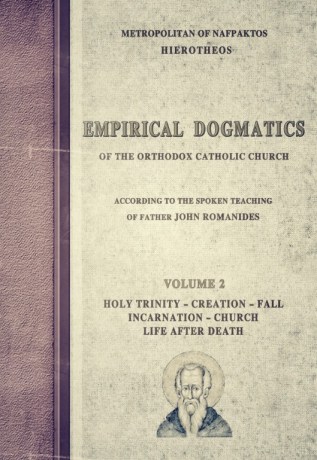
—Metropolitan Hierotheos of Nafpaktos. “Empirical Dogmatics of The Orthodox Catholic Church. According to the Spoken Teaching of Father John Romanides.” Volume 2. 2013.
Source- http://thoughtsintrusive.wordpress.com/
We must strive so that all of our life, as a whole. and not certain hours and days, is based on the Law of God. We must arrange all of our activities so that they are in agreement with the will of God. Only under these conditions will our heart be pure, and only the pure in heart will see God.( Mathew 5:8)
St. Nikon of Optina

How do I know, you will ask me, that if I confess my sin I will erase it?
I will respond: In the Holy Scriptures you will find both him who confessed and erased his sin, as well as him who did not confess it and was condemned.
Cain murdered his brother due to jealousy. At some point later, God asked him: “Where is your brother Abel?” (Gen. 4:9). He asked him not because the all-knowing God was unaware, but because He wanted tol ead the murderer to repentance.
However, Cain answered: “I don’t know.
Am I perhaps my brother’s keeper?” (Gen. 4:9). Fine! You were not his guardian; but why did you become his murderer?
You were not looking after him; but why did you kill him? How do you dare respond in this manner? This is why God said to him: “The blood of your brother cries out to Me from the earth” (Gen. 4:10). God punished him immediately; not so much on account of the murder, but more so on account of his insolence.
Because God does not abhor the person who sins as much as the person who is shameless. And so, even though Cain was filled with remorse later,he was not forgiven because he did not confess his sin first. He was punished because of his shamelessness. He was condemned because he did not confess his sin. Had he confessed it, he would have erased it.Now look at how another person confessed his sin and erased it.
The prophet and king David fell into two sins: adultery and murder. A prophet fell into adultery; a pearl ended up in the mud. What did God do?
He sent the prophet Nathan to him, who said: “My king, I want to ask your opinion on a certain matter. There was a rich man and a poor man. The
rich man had many sheep and calves. The poor man had nothing other than a small lamb.
Some day, a visitor came to the rich man; but instead of slaughtering one of his own animals, he slaughtered the poor man’s lamb in order to provide hospitality to his guest” (2nd Kings 12:1-4). What was the king’s reaction? Assuming that it was someone else, he became enraged and said to Nathan: “This person must be put to death! “(2nd Kings12:5-6). What a harsh ruling! This is how people are. They easily condemn others exceedingly strictly and harshly.
“You are the person who did this,” responded Nathan. And David at once admitted: “I have sinned before the Lord” (2nd Kings 12:13). He did
not say, “Who are you to criticize me? Who told you to speak to me with such impudence? How dare you accuse me?” Rather, he senses his sin,
and he admits: “I have sinned before the Lord.” This is why Nathan assured him: “And the Lord has forgiven your sin.” God forgave him because he blamed himself. He erased his sin because he confessed it valiantly. Confession, therefore, is the first road leading to repentance.
St. John Chrysostom


