Saturday, April 6, 2019

How do you know whether you are living according to the will of God? ( St.Silouan the Athonite )

How do you know whether you are living according to the will of God? 
Here is a sign: 
If you long for some thing, then you have not submitted to the will of God, even though you may think that you live according to His will. Whoever lives according to the will of God does not concern himself with anything. And if he needs some thing, then he submits himself and that thing to God; and if he does not receive it, then he remains content as though he had received it. 
The soul which has submitted to the will of God, fears nothing: neither storm nor bandits; nothing. And whatever should happen, it says, "It is God’s will." If the body is ill, the soul thinks, "Then I am in need of this illness, otherwise God would not have given it to me." And so the body and the soul remain at peace.


St.Silouan the Athonite

Monday, April 1, 2019

Our Orthodox philosophy must not become part of some kind of cult or sect, but rather part of our daily life. ( Father Seraphim Rose )


The one thing that can save us is simplicity. It can be ours if in our hearts we pray to God to make us simple; if we just do not think ourselves so wise; if, when it comes to a question like, "Can we paint an icon of God the Father?" we do not come up with a quick answer and say, "Oh, of course it's this way—such-and-such Council said so-and-so, canon number so-and-so." And so either we, "knowing" that we must be right, have to excommunicate everyone else—in which case we have "gone off the deep end"—or else we have to stop and think, "Well, I guess I don't know too much." The more we have this second attitude, the more we will be protected from spiritual dangers.

Accept simply the faith you receive from your fathers. If there is a simple hearted priest near you, give thanks to God. Consider that because you are so complex, "intellectual" and moody, you should be able to learn much from him. The more you grow in Orthodoxy by reading and exposure to Church and contact with Orthodox people, the more you will be able to "feel your way" in the whole realm of Orthodoxy. You will begin to see the wisdom behind things and people you had dismissed before. You will begin to see that even if the people who are the "links" to the past are not consciously "wise," nevertheless, God is guiding the Church. We know that He is with the Church until the end; there is no reason to "go off the deep end," to fall into apostasy and heresy.

If we follow the simple path—distrusting our own wisdom, doing the best that we can, yet realizing that our mind, without warmth of heart, is a very weak tool—then what Kireyevsky talked about will begin to happen: an Orthodox philosophy of life will begin to be formed in us.

We are confronted with the same obstacles Kireyevsky faced, only to an even greater degree. Living in the midst of Western culture, we have to try to assimilate a philosophy and theology which has come from almost 2,000 years ago and has become totally estranged and foreign to the world. Our Orthodox philosophy must not become part of some kind of cult or sect, but rather part of our daily life. By taking one small step at a time and not thinking that in one big leap we are going to get anywhere, we can walk straight into the Kingdom of Heaven—and there is no reason for any of us to fall away from that.


Father Seraphim Rose

Wednesday, March 27, 2019

The Jesus Prayer renders man a communication of divine glory ( St. Symeon Archbishop of Thessaloniki )

This divine prayer, which consists of the invocation of the name of our Savior Jesus Christ, specifically “Lord Jesus Christ, Son of God, have mercy on me,” is simultaneously a prayer, a devotion, and a confession of faith. 
 
This prayer bestows the Holy Spirit, it transmits divine gifts, it purifies the heart, it banishes the demons, it makes Jesus Christ dwell within us, it is a source of spiritual understanding and divine awareness, it liberates us from sins, it is a cure for both our souls and bodies, it imparts divine enlightenment, it is a fountain gushing forth God’s mercy, and it confers divine revelations and mystical knowledge of God to them who have humility. 
 
It is the only thing that affords salvation, because it contains the salvific name of our God, which is the only name that has been given to us [for salvation], that is the name of Jesus Christ the Son of God, and it is not possible for us to be saved through any other name, as the Apostle Peter indicates: “Nor is there salvation in any other, for there is no other name under heaven given among men by which we must be saved” (Acts 4:12).
 
It is primarily a prayer, because through it we seek God’s mercy. It is also a devotion, because we surrender ourselves to Christ when we invoke His name. Furthermore it is a confession, because when the Apostle Peter confessed this name, “You are the Christ, the Son of the living God,” he was praised by the Lord thus, “Jesus then answered and said to him, ‘Blessed are you Simon Bar-Jonah, for flesh and blood has not revealed this to you, but My Father who is in heaven’” (Mt. 16:16-17). It also imparts the Holy Spirit, because no one can refer to Jesus as “the Lord” without the Holy Spirit: “No one can say that Jesus is Lord except by the Holy Spirit” (1 Cor. 12:3). 
 
Additionally, it is the transmitter of divine gifts, since it was on account of this confession that Christ promised the Apostle Peter that He would give him the keys to the Kingdom of Heaven: “And I will give you the keys of the kingdom of heaven,”(Mt. 16:19). 
 
It is purification of the heart, because it sees and calls upon God Who purifies the person beholding Him. It expels the demons because with the name of Jesus Christ all the demons were and continue to be expelled. It is the dwelling of Christ within us, because when we bring Christ to mind, He is within us, and with this memory He dwells in us and fills us with joy, just as the Prophet David describes in the Psalms, “I remembered God and I was gladdened” (Ps. 76:4). 
 
Furthermore, it is a fountain of spiritual understanding and contemplation because Christ is the treasury of all wisdom and knowledge: “Of Christ, Whom are hidden all the treasures of wisdom and knowledge” (Col. 2:3), and He transmits these to them in whom He dwells. It is liberation from sins because on account of this confession the Lord said to Peter, “And whatever you bind on earth will be bound in heaven, and whatever you loose on earth will be loosed in heaven” (Mt. 16:9). 
 
It is the cure of our souls and bodies because the Apostle Peter said, “‘In the name of Jesus Christ of Nazareth, rise up and walk,’ and immediately the lame man “stood and walked” (Acts 3:6-8); and elsewhere when he said, “‘Aeneas, Jesus the Christ heals you. Arise and make your bed.’ Then he [Aeneas] arose immediately” (Acts 9:34). It is the issuer of divine enlightenment because Christ is the true light: “He is the true Light who gives light to every man coming into the world” (Jn. 1:9), and He transmits His brilliance and grace to them who call upon Him, as it is stated in the Psalms: “And let the brightness of the Lord our God be upon us” (Ps. 89:17). The Lord likewise confirms: “I am the light of the world. He who follows Me shall not walk in darkness, but have the light of life” (Jn. 8:12). 
 
It is moreover a fountain of God’s mercy because we plead for mercy, and the merciful Lord shows His compassion to all them who call upon Him, “The Lord is nigh unto all that call upon Him” (Ps. 144:18) and He quickly administers justice to all them who call upon Him: “Shall God not avenge His own elect who cry out day and night to Him, though He bears long with them? I tell you that He will avenge them speedily” (Lk. 18:7). 
 
This is the marker of our faith, since we are called and are in deed Christians, and it also serves as testimony that we are of God. For the Evangelist states: “Every spirit that confesses that Jesus Christ has come in the flesh is of God” (1Jn. 4:3), as we have already mentioned, and whoever does not confess this is not from God; whoever does not confess Jesus Christ is from the antichrist. 
 
This is why all we faithful must ceaselessly confess this name: in order to profess and proclaim our faith; on account of the love of our Lord Jesus Christ, from which love nothing must ever separate us: “What shall separate us from the love of Christ? ... neither death nor life, nor angels nor principalities nor powers, nor things present nor things to come, nor height nor depth, nor any other created thing shall be able to separate us from the love of God which is in Christ Jesus our Lord” (Rom. 8:35); and because the name of Christ bestows grace, forgiveness, redemption, healing, sanctification, enlightenment, and above all salvation. Because with this divine name the Apostles accomplished and taught great and wonderful things. And the divine Evangelist says, “these things are written so that you may believe that Jesus is the Christ, the Son of God”–behold the faith! “And that believing you may have life in His name”—behold the salvation and the life! (Jn. 20:31).
 
St. Symeon Archbishop of Thessaloniki
 
https://www.stnektariosmonastery.org/en/index.php 

Wednesday, March 20, 2019

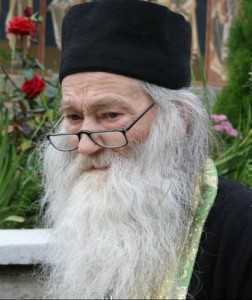
“Man is half love, half struggle” ( Elder Justin Pârvu )


The newly departed servant of Christ,

Elder Justin (Pârvu) of Romania and his Words of Wisdom


Motto: “If we would be willing to descend into our selves to correct a bit this avalanche of wrongdoings, then our prayer will be heard, the world would be more at peace and our life would suit more the Lord’ liking.

We have become increasingly hostile towards each other by our own selfishness, we see no one but our selves… and when we reach this state of no longer caring for those near us, we encounter the greatest fall”.


Man’s freedom is at the measure of his genuine love

Freedom becomes precious only when it is lost. Or at least, this is how we think. All his life man seeks to be free, but does not appreciate the gift of his freedom until it is too late. Freedom is in our body but also in our heart. Freedom is in action but also in the mind and the intellect. Man is free by how genuinely he loves and is attached to the values of the faith.

We are free when we accept God’s plan for our life, and when we strive to achieve it. Being free does not mean lethargy and bliss, but the fulfillment of your human condition.

Freedom does not mean to do what I always wish, as many times by doing what I like I do the will of the devil. Freedom is at the measure of man discernment, and his capacity to choose between good and evil. Man must realize that only in Truth he can live freely and with so much confusion in this world, he should avoid deception. It was what Communists did not understand, that only on the Cross the human soul gains true freedom, that all their methods of torture and psychological pressure to re-educate us, have made more saints than slaves, have sanctified our land by the martyrs blood.

Freedom is hard to understand when one has not lived in those times [of persecution], and our Christians today barely reflect of this past.


The thirst for God and the love for all people


The thirst for God directs us towards the love of our neighbor and vice versa. So great is the power of love that one who reaches a genuine love for all people denying oneself, receives the gift of healing.

This is the true “follower” of Christ! Such man loves with the love of Christ all those fallen, thus partakes in Christ’ mission on earth and save himself.


Man is half love, half struggle


(Excerpt from an interview given by the Elder Justin in 2007)

Q: – Father Justin, from your experience of “burying yourself in man suffering”, what do you think, does man need: to be understood or to be loved?

Elder Justin: – Man needs to be loved. But to love him, you must first understand him. If you see him fallen down, then you must give him your hand. The love of neighbor is one’ measure of the love for God. If you cannot love the one near you, if you do not help him, you cannot say you love God.

The love of neighbor is the first step towards salvation, on this step one must labor until he reaches the greatest love for God.


Q: – During the communist regime, we have been [spiritually] poised by the slogan “new man”. Do you think we ended up with this “new man”?

Elder Justin: – You mean, in a materialistic sense? Maybe how the communists had imagine a man freed from the “bondage” of faith and of the Holy Spirit…! But a new man purified and renewed… not so.

But I want to speak more of the new man reborn in Christ, a man that’s quite rare in our present times. The renewal of man and of the world can happen only through the Resurrection of Christ, in its profound meaning. This is the new man, whom every mother preparing to bring babies into the world, must dream of modeling. 
 

Q: – Einstein once said that “the progress made by man, compared with the development of his character, is enough to terrify …”

Elder Justin: - Yes… for a soul that’s at peace with itself can fit the whole world within; while in the soul that’s bitter, soured and distressed, nothing can enter… 
 

Q: – How do you think man should be?

Elder Justin: - Man is – or should be! – Half love and half sacrifice, struggling to keep love undefiled. 
 

Q: – A great thinker of the last century, Carl Gustav Jung said: “For a young man is almost a sin or at least a risk to be too much preoccupied with himself, while for the elder man, it is a duty and a necessity to commit to a more serious self study.” How do you see this?

Elder Justin: - At the end of this search man must find God. God made man in His own image, and God dwells in everyone. Young or old, man must clean up the inside of his being, for no one knows when the end comes… 
 

Q: – Someone said that “in an empty mind, the devil finds shelter”… 

Elder Justin: - He is speaking of the man who has the basket always full, for he cares for the wheat needed to be milled. And this wheat is our constant cry to God: “Lord Jesus Christ, Son of God, save us.” If the enemy finds our mind wandering in useless things, he will enter and find shelter directing it at his pleasure (…) 
 

Q: – Is there a question that man is rendered to never find the answer in this life?

Elder Justin: - It depends on what someone wants to know. Man has all the answers within himself. About his birth, his life and the meaning of his salvation. But if he wants to find answers to meaningless questions, then he will be constantly miserable. If he seeks answers to questions related to his faith, his purpose in life, he will find happiness.


Q:- Is doubting a sin for the Christian?

Elder Justin: - Yes, but there are “permitted” doubts. A doubt that you’re still alive after a fervent prayer, when your whole being had burned in prayer… This kind of doubt is allowed. 
 

Q: – Father, what is humility?

Elder Justin: - Humility is a fair self-assessment of our human dimensions in relation to the [universe] infinite. Humility accompanied by patience move mounts, that’s how powerful can become for any Christian… 
 

Q: – What is Golgotha [Calvary] for today’ Christian?

Elder Justin: – Man’ unbelief makes every day into a Golgotha. 
 

Q: – Man today is more skeptical than fifty years ago? What can you say to encourage him to go forward, to cope with the trials of life?

Elder Justin: – Our modern man puts too much heart into trifles and details, is assaulted by a lot of false things and does not know how to choose. If you choose wisely, things will become easy and the life beautiful. If you choose wrongly, you are struggling. If you doubt that you have chosen well, your heart is also troubled. Our contemporary man has become too materialistic, a subject to the new tyrant: money. Everywhere we look, we hear that money is everything, the master of this world. He, who makes money his master, makes himself a servant to the devil.

Today, many dramas arouse not from differences in ideas, but from the battle with money, with all that is material. Man bought by it losses his faith and his values and becomes a mare currency. 
 

Q: – How do you define the word happiness? … What advice would you give to Christians who come to you and say they are unhappy?

Elder Justin – Happiness is when you meet with the love of Christ humbly in prayer.

People understand happiness differently. Some who want much may not get it, and feel unhappy. While others may desire less, receive it and are content….


Q: – So happiness is at the measure of man…

Elder Justin: – Happiness is the faith that dwells in us. We have seen people that have many riches, great social positions and they’re still unhappy, because they lock faith! 
 

Q” – There is a story in the Egyptian Paterikon: it happened that a wise elder once sat at the table with several brothers; as they were eating, the elder saw in the spirit how some ate honey, others bread, and some others dung. And the elder marveled and prayed to God, saying, “Lord, reveal to me this secret, how is that the same food is on the table before all, but they seem to eat different food.” And a voice came, saying, “They who eat honey are those who with fear, trembling and spiritual joy sit at the table and pray unceasingly so their prayers go up to God as incense. Those that eat bread give thanks to God for the food, and they who eat dung, are those who complain: “this is good, this is rotten”….

Elder Justin: – Yes, gratitude for what one has received is after all, a measure of man’ faith.


We need to pray with our hearts


  -We must honored with much gratitude the sacrificial love of our martyrs.

  -It is very important to know how to pray. And often, we monks in monasteries do not pray, but we just seem to be praying. It’s not enough to go to church and to sit there like you did your duty or obligation. We must insist on inner prayer. In vain we say many prayers with our mouth or our mind, if we do not sail deeply, if we do not live what we pray.

  -In our times, even the laity need to deepen the Jesus prayer, as it will become our only salvation – prayer into the heart; the heart is the root of all passions and there we must labor. In the past we were able to go by in a more easy – superficial way, but for the times awaiting us, this will not be enough. If we will not have the prayer rotted in our hearts, we will not resist the psychological persecution awaiting us, because soon they will come with [hidden] methods to re-educate our minds. (the elder had the gift of prophesy/ clairvoyance, tr. note).

-Today I find that indifference [acedia] is the hardest sin. Our hearts no longer move in prayer, we have no tears of repentance. There will come a time when only those who feel the grace of the Spirit will be able to distinguish good from evil, for on its own, the human mind cannot discern. There will be times of great confusion and only the Holy Spirit can save us.

So, pray my beloved, pray so you may not enter into [temptation] deception! For only through prayer we can receive God’s grace. If we do not pray and continue in laziness and carelessness, then it is possible to lose the instinct of repentance. God forbid that we may not lose conscious!


(Translated by EC)

Friday, March 15, 2019

How Should We Spend Sundays?


Sunday is the day set aside to honor God and should be spent differently from all other days. It is a day we raise our minds and hearts to God with deep reverence towards Him and with profound gratitude and prayer. In the Old Testament it was the Sabbath that was such a day but in the New Testament it is Sunday, the Lord's Day.

Moses was told, "Remember the sabbath day, to keep it holy. Six days shalt thou labor, and do all thy work: But the seventh day is the sabbath fo the Lord thy God: in it thou shalt not do any work" (Exodus 20:8-10). In the Old Testament the penalty for not keeping it holy was the death of the soul.

What were the reasons for this commandment from God?
a. It was hallowed by God in memory of the creation of the world. In Genesis ti says, "On the sixth day God ended His work which He had made; and He rested on the seventh day from all His work He had made. And God blessed the seventh day, and sanctified it: because in it hHe had rested from all His work which God created and made" (Gen 2:2-3).

b. The other reason is the remembrance of the liberation of the people of Israel from Egyptian bondage as we are instructed in Deut 5:12-15. Similarly the people of the New Testament were delivered from the bondage of sin by the death of Jesus Christ and it is prescribed also for us to consecrate the day of the Old Testament Sabbath on the day of the Resurrection, Sunday.
Metropolitan Gregory of St. Petersburg puts it this way: "The Lord has granted us six days of every week to carry out our business necessary for our earthly life, but the seventh day–only ne day–He appointed for rest under pain of eternal death for violating it..."

Saint John Chrysostom says: "It was the Lord's good will to prescribe that we dedicate one day in the weekly cycle to spiritual matters."

In the book of Acts we see that original Christians gathered on Sunday for the breaking of bread and listened to His teachings (Acts 20:7).

There are several obligation that Sunday imposes on us.
1. We should set aside all the business we need to engage in during the six days of the week to supporrt ourselves.

2. We should turn away from all impious acts that distract our souls from the remembrance of the Lord God, reverence towards Him, gratitude and a prayerful disposition of soul towards Him. This includes all unedifying reading, conversations and games where our soul might lose remembrance of God and potentially be carried away by delights and sin.

3. We are to attend the Divine Liturgy. This service is the ultimate remembrance of God's various blessings. In our attendance we reverence God, give Him thanks, and seek through our prayers that His blessings will continue to be given to us. We join in communion with Him as we partake of His body and Blood.

4. We should reflect on all of God's creation and His All-Powerful nature, His Wisdom, Goodness and unconditional Love for us. We should experience the wonder and awe of His creation in the natural environment. We should reflect on His life and the path He laid out for us through His death and Resurrection.
Metropolitan Gregory says. "You who love God: follow the path unto which the Lord has directed you and fear nothing...only try to please the Lord God, and then, remembering the words of the Holy Apostle, "If God be for us, who can be against us?" (Rom 8:31)... Do not be afraid, just try and avoid all occasions of sin through which our enemy always more easily lures us into his nets and ruins us."

You should contemplate His passion and death, how he suffered for us and think of what is written in the Gospel of John, "Behold how God so loved the world, that He gave His only begotten son, that whosoever believes in Him shall not perish, but have everlasting life." (John 3:16).

5. We should read the Scripture on this day just like the first members of His Church (Acts 20:7). We are all called to live a holy life in His image. "God has chosen us in Him before the foundation of the world, that we should be holy and without blame before Him." (Eph 1:4)

6. Metropolitan Gregory reminds us: "We must examine ourselves every day in relation to our salvation, so much more should it be our obligation on Sundays... Sunday before all other days should be a day on which we make the most attentive and detailed examination of our spiritual state in relation to salvation, and make a new, firm intention to root out from ourselves everything "opposed to God and our salvation."

Reference: How to Live a Spiritual Life, pp 112-137